


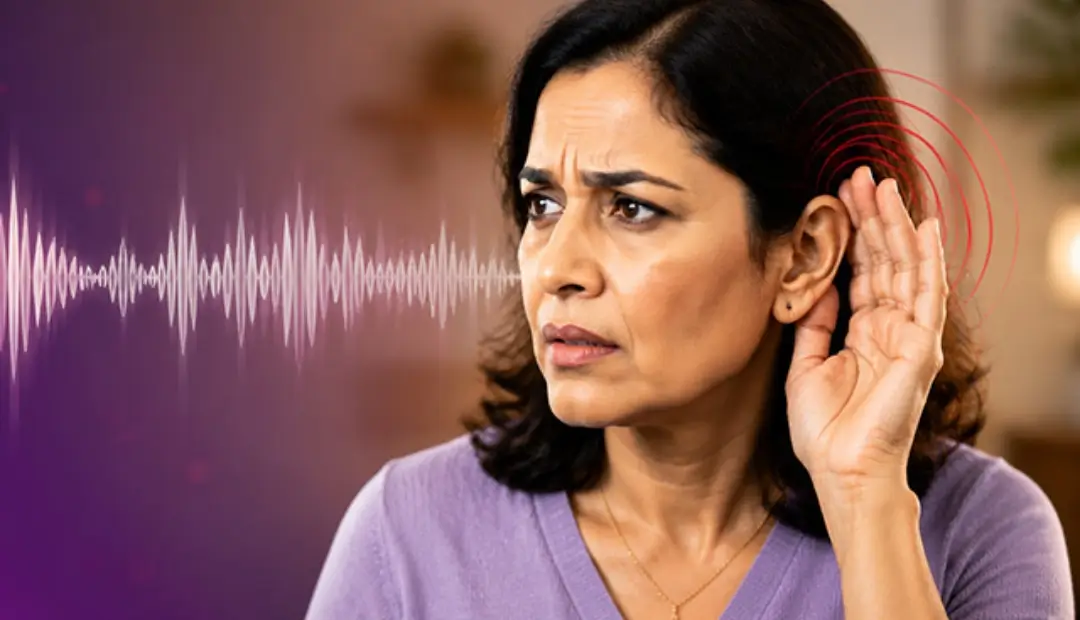
You hear someone speaking, but their words seem less clear than they once did. You turn up the television, ask people to repeat themselves, or struggle during conversations in busy places. These experiences may be early hearing loss symptoms, especially when they develop gradually after age 50.
At first, the changes may seem too minor to deserve attention. You might blame background noise, tiredness, or people who speak too quietly. However, gradual hearing changes can affect everyday communication long before you recognize their cause.
The difficulty goes beyond missing a few words. Conversations may become exhausting, family gatherings less enjoyable, and social situations increasingly uncomfortable. Understanding what causes these changes can help you take practical steps toward protecting your hearing and staying connected.
Why Gradual Hearing Loss Can Be Difficult to Recognize
Hearing changes rarely announce themselves with one obvious moment. Instead, certain sounds become harder to distinguish, while others remain surprisingly clear. This gradual pattern can make it difficult to notice how much your hearing has changed.
The Hidden Changes Behind Hearing Loss
Discover why gradual hearing changes can make familiar voices harder to understand, even when you still hear surrounding sounds.
You may still hear the doorbell, traffic, or a ringing telephone. Yet following a conversation across the dinner table may suddenly require more concentration. This difference happens because hearing involves more than detecting sound; your brain must also interpret it.
Age-related hearing loss, known medically as presbycusis, often develops slowly. It commonly affects both ears, although the degree of hearing difficulty may differ. The National Institute on Deafness and Other Communication Disorders (NIDCD) explains how age-related changes can gradually reduce hearing ability.
Common Hearing Loss Symptoms You Should Recognize
Hearing loss symptoms can appear differently from one person to another. Some people notice difficulty understanding speech, while others first struggle with high-pitched sounds. Recognizing recurring patterns can help you decide when to arrange a hearing assessment.
1. Conversations Become Harder to Follow
You hear people talking, but you cannot always understand what they say. Certain words seem unclear, especially when someone speaks quickly or turns away. You may find yourself asking others to repeat entire sentences.
This difficulty often becomes more noticeable during group conversations. Several voices compete, and background sounds make speech harder to separate. You might follow one person easily but lose track when another joins the discussion.
2. Background Noise Makes Understanding Speech Difficult
A restaurant, family gathering, or crowded waiting room can become surprisingly challenging. You hear plenty of sound, yet individual voices seem to blend together. Following a conversation may require intense concentration.
This problem does not necessarily mean every sound has become quieter. Some hearing difficulties involve reduced clarity, particularly when several sounds occur together. An audiologist can assess these listening difficulties through appropriate hearing tests.
3. You Keep Increasing the Television Volume
You reach for the remote because dialogue sounds unusually quiet. Someone sitting beside you complains that the television has become too loud. Repeated disagreements about volume may indicate possible hearing loss symptoms.
Television volume alone cannot diagnose a hearing problem. However, a repeated need for louder sound deserves attention, especially alongside other communication difficulties. Notice whether family members also report that you frequently misunderstand spoken words.
4. High-Pitched Sounds Become Less Noticeable
Some people gradually struggle to hear higher-frequency sounds. Children’s voices, birdsong, and certain electronic tones may become less distinct. You might notice that familiar sounds seem different or disappear from your awareness.
Look Beyond Louder Sounds
Explore an overlooked perspective on hearing loss and why increasing volume may not solve difficulties understanding everyday speech.
Age-related hearing changes often affect higher frequencies first. This can make consonants such as S, F, and T harder to distinguish. As a result, speech may sound muffled even when you hear someone’s voice.
5. You Often Misunderstand Similar-Sounding Words
You may hear a sentence but misunderstand one important word. Someone says one thing, while you confidently respond to something completely different. These moments can create confusion during ordinary conversations.
Speech clarity depends on distinguishing small differences between sounds. When hearing sensitivity changes, certain speech details become harder to recognize. You may understand the general topic but miss names, numbers, or specific instructions.
6. Phone Conversations Become More Difficult
Talking on the phone removes important visual clues from communication. You cannot watch someone’s lips or facial expressions to support understanding. Consequently, phone conversations may become harder than face-to-face discussions.
You might prefer speakerphone or ask callers to repeat information. Some people avoid answering unfamiliar numbers because conversations feel stressful. If this change continues, include it when discussing your hearing with a professional.
7. You Feel Tired After Listening
Following conversations may require more mental effort than before. You concentrate intensely, fill in missing words, and guess what someone means. By the end of a social event, you may feel unusually exhausted.
This experience is sometimes called listening fatigue. It can occur when understanding speech requires sustained concentration. Although fatigue has many possible causes, recurring listening difficulties deserve attention.
How Hearing Changes Can Affect Confidence and Everyday Life
The emotional effects of hearing difficulties can develop gradually too. You may worry about misunderstanding people or responding incorrectly. Over time, ordinary conversations can begin to feel like situations you would rather avoid.
Some adults become quieter during family gatherings. Others stop attending noisy restaurants, community events, or social activities. These choices may reduce immediate frustration, but they can also limit meaningful connections.
Hearing difficulties can affect independence in practical ways. Missing a telephone instruction, doorbell, or warning sound may create additional challenges. The NIDCD notes that hearing problems can interfere with communication, safety, and relationships.
It is important not to interpret these changes as personal failure. Hearing is a sensory process that can change with age, noise exposure, and medical conditions. Seeking an assessment is a practical step, not something to feel embarrassed about.
What Causes Hearing Loss Symptoms After Age 50?
Age is one possible contributor, but it is not the only explanation. Hearing difficulties can result from problems in different parts of the ear. Identifying the underlying cause matters because some conditions have treatable solutions.
Your Brain May Be Working Harder
Learn about the connection between hearing difficulties, sound processing, and the extra effort everyday conversations may require.
Age-Related Changes in the Inner Ear
The inner ear contains delicate sensory cells that help convert sound vibrations into electrical signals. These signals travel through the auditory nerve to the brain for interpretation. Age-related changes can gradually affect this process and reduce hearing sensitivity.
Presbycusis often develops over several years. Genetics, lifetime noise exposure, and general health may influence its progression. Although age-related hearing loss cannot always be reversed, appropriate support can improve communication.
Long-Term Exposure to Loud Noise
Repeated exposure to loud sounds can damage delicate structures inside the inner ear. Risk may come from noisy workplaces, machinery, concerts, or excessively loud headphones. The effects can accumulate over time, even when individual exposures seem manageable.
Noise-related hearing damage may affect people before older age. It can also combine with age-related changes later in life. The World Health Organization (WHO) identifies loud sound exposure as an important preventable contributor to hearing loss.
Earwax Buildup and Other Ear Conditions
Sometimes, reduced hearing has a relatively straightforward explanation. Impacted earwax can block the ear canal and interfere with sound transmission. Ear infections and middle-ear problems may also cause temporary or persistent hearing difficulties.
These conditions require appropriate examination rather than guesswork. Never insert cotton swabs or other objects deeply into your ear canal. A healthcare professional can determine whether wax removal or medical treatment is appropriate.
Medications and Other Health Factors
Certain medications can affect hearing or cause ringing in the ears. These include some treatments used for serious infections, cancer, and other medical conditions. The risk depends on the specific medicine, dose, and individual circumstances.
Never stop prescribed medication because you suspect a hearing side effect. Discuss any new hearing changes with the prescribing clinician. They can review your treatment and decide whether monitoring or alternatives are appropriate.
Other health conditions may also contribute to hearing difficulties. A detailed medical history helps clinicians consider possible causes and relevant risk factors. The WHO also highlights infections, head injuries, and other ear conditions among potential contributors.
How Doctors Identify the Cause of Hearing Difficulties
A hearing assessment usually begins with questions about your symptoms and medical history. The clinician may ask when the changes started and whether one ear seems worse. They may also discuss noise exposure, medications, tinnitus, and communication difficulties.
An examination of the ears can reveal wax buildup or visible abnormalities. A hearing specialist may then perform pure-tone audiometry to measure hearing sensitivity. This test helps identify which pitches and sound levels you can hear.
Discover Another View of Hearing Health
Explore a different approach to understanding gradual hearing changes and the options that may support clearer everyday communication.
Some assessments include additional tests when the symptoms suggest a middle-ear problem. The specialist chooses these tests according to your history and examination findings. The NICE guideline on hearing loss in adults recommends audiological assessment for adults with suspected hearing difficulties.
What Can Help You Manage Hearing Loss Symptoms?
The right approach depends on the cause, severity, and effect on daily communication. Some problems improve after treating an underlying ear condition. Others require ongoing hearing support and practical communication adjustments.
Hearing Aids and Assistive Listening Devices
Hearing aids amplify and process sounds to support people with hearing difficulties. Modern devices offer different features, sizes, and levels of adjustment. An audiologist can help identify suitable options after assessing your hearing needs.
Assistive listening devices can also help in specific situations. Some systems improve access to television audio or speech in particular environments. The best option depends on your hearing profile, lifestyle, and personal preferences.
Cochlear Implants for Selected Cases
Some people have severe or profound hearing loss that hearing aids cannot adequately address. A cochlear implant may provide another option for suitable candidates. Specialists assess hearing, medical factors, and expected benefits before recommending this treatment.
Cochlear implants do not restore normal natural hearing. They provide electrical stimulation to the auditory nerve through an implanted system. Rehabilitation and practice help recipients adapt to the sounds the device provides.
Communication Strategies That Make Daily Life Easier
Small environmental changes can make conversations easier to follow. Choose quieter places when discussing important information with family or friends. Face the speaker and reduce competing background noise whenever possible.
Ask people to speak clearly at a natural pace. Request rephrasing when repeating the same sentence does not help. Captions, written instructions, and suitable phone settings can provide additional support.
Protecting Your Hearing as You Get Older
You cannot prevent every cause of hearing loss. However, reducing avoidable risks can help protect the hearing you have. Simple habits are especially valuable when followed consistently over time.
- Keep personal listening devices at a moderate volume.
- Take breaks from loud environments whenever possible.
- Use suitable hearing protection around loud machinery and tools.
- Follow workplace hearing-safety recommendations.
- Ask your clinician about possible hearing-related medication effects.
- Seek professional advice for persistent ear symptoms.
Protective habits matter even when you have already noticed hearing changes. They may help reduce additional noise-related damage. The WHO provides further guidance on safe listening and hearing-loss prevention.
When Should You Seek Medical Advice?
Arrange a hearing assessment if conversations increasingly become difficult to follow. Persistent ringing, one-sided hearing changes, or recurring ear symptoms also deserve medical attention. Early evaluation can identify treatable problems and clarify which support options may help.
Some symptoms require urgent attention rather than a routine appointment. Sudden hearing loss in one or both ears can represent a medical emergency. Do not wait to see whether it improves on its own.
NICE recommends immediate specialist assessment within 24 hours when unexplained hearing loss develops suddenly over three days or less. This applies when the change occurred within the previous 30 days. Rapid worsening over several days or weeks also requires urgent assessment.
Seek emergency care if sudden hearing changes occur with facial weakness or altered sensation. Severe dizziness, neurological symptoms, or other alarming changes also need prompt medical evaluation. A clinician can determine the appropriate assessment and treatment.
Hearing Loss Symptoms Deserve Attention, Not Acceptance
Gradual hearing changes can be easy to dismiss because they rarely disrupt everything at once. You may simply turn up the television or avoid conversations in noisy places. Yet these small adjustments can reveal a growing communication problem.
Recognizing hearing loss symptoms gives you an opportunity to understand what is happening. A professional assessment can identify possible causes and explain suitable options. You do not have to wait until conversations become consistently frustrating.
Hearing support is about more than detecting sounds. It can help you participate in family conversations, enjoy social activities, and communicate with greater confidence. Taking the first step may make everyday interactions easier to manage.
What If Your Hearing Changes Reveal Something More?
Discover an overlooked connection between gradual hearing loss, the brain’s ability to process sounds, and why conversations become harder to understand.
Explore a different perspective on hearing health and learn about factors that may help you support clearer communication as you age.