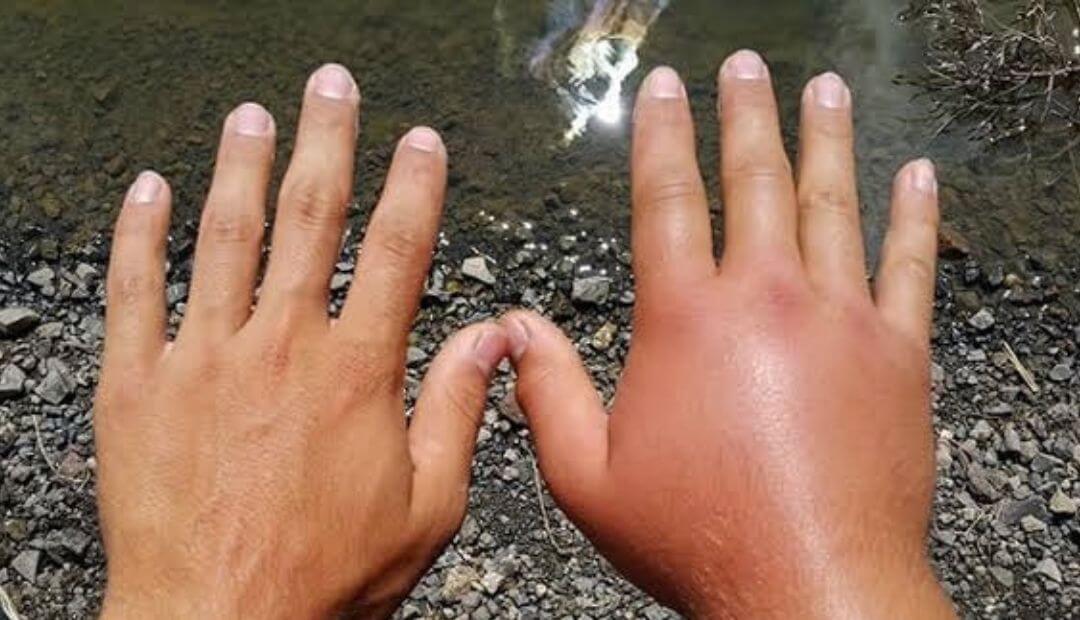
If you wake up with puffy hands, you may feel that your fingers are stiff and thick. Your rings may be tight and you may also find it awkward to hold your toothbrush. Many women will experience swollen hands in the morning and wonder why. However, simple lifestyle changes can often reduce the swelling in your hands within an hour or two.
This article will give you 9 simple remedies that you can try at home. There are some brief explanations so you know which remedies to try. There are also some tips on walking, pregnancy and when to see a doctor. This is general information and not a diagnosis. These are great for mild and pain free swelling.
What Does It Feel Like to Wake Up With Puffy Hands?
Having stiff and swollen hands can make the first few minutes of the day difficult. It can make simple tasks like buttoning up, opening jar lids and using your phone more difficult. It can also make your favourite ring difficult to move. Many women feel a little embarrassed by swollen hands.
If you find it difficult to make a tight fist in the morning and have a busy day ahead it can make you feel a little anxious. Should I cancel my plans? This can make you feel anxious throughout breakfast and your commute.
Generally you will feel better once you understand why your hands are swollen. It is common to wake up with puffy hands because your hands can swell overnight and most mild cases can be helped by simple lifestyle changes. Here is why.
What Could Your Hands Be Signaling?
If swollen fingers make everyday tasks uncomfortable, watch the video for another perspective on fluid balance and circulation.
Why Do I Wake Up With Puffy Hands?
Whilst you are resting your body will redistribute the fluid that has built up in your legs during the day. Some of this will pool in your hands. Swollen hands can also occur if you sleep with your wrists bent or arms tucked under your pillow.
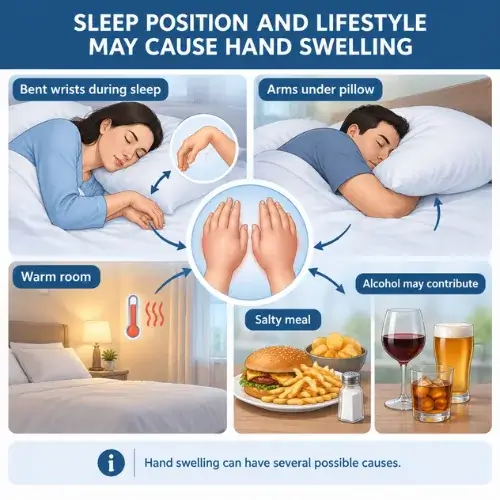
A warm room, salty meal or alcohol can also contribute. The NHS guidance also identifies fluid buildup and staying in one position for too long as possible causes of hand swelling.
Hormonal changes, pregnancy and joint/nerve conditions can also be a factor. This article is focused on helping you reduce the swelling. It is not a full list of reasons why. The correct remedy will be more important. If you continue to have swelling it is a good idea to see a doctor to find out why.
9 Simple Remedies to Try When You Wake Up With Puffy Hands
1. Take Off Rings
Rings that fit fine at lunchtime can feel tight in the morning. Taking them off at night will prevent any pressure marks and help reduce the swelling. Place them in a small dish next to your bed.
If you often wake up with puffy hands it is a good idea to make this a habit. Even if your fingers feel fine it is a good idea to take them off. If your rings are completely stuck and your fingertip looks pale or numb then seek medical advice.
2. Elevate Your Hands
Elevating your hands above your heart will help drain the fluid. Try lying down with your arms propped up on a pillow for 10 minutes either before bed or straight after waking. This is a great way to reduce mild swelling.
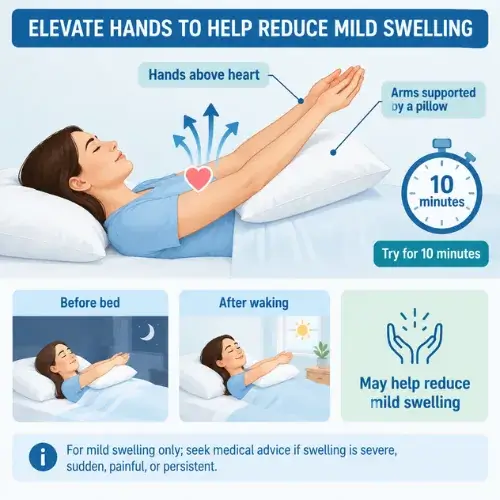
Try not to tuck your arms under your head or pillow whilst you sleep. Keeping your hands relaxed and open will make it easier for your circulation. You can place a thin pillow next to you to help support your arms.
3. Move Your Hands
Moving your hands will help drain the fluid from your fingers. Make a loose fist and open your hand wide. Repeat 10 times. You can also move your wrists in circles, lift your fingers and gently stretch your thumb.
Do this for a few minutes after waking. Stop if you feel any pain or tingling. Doing this regularly will also help keep your joints flexible.
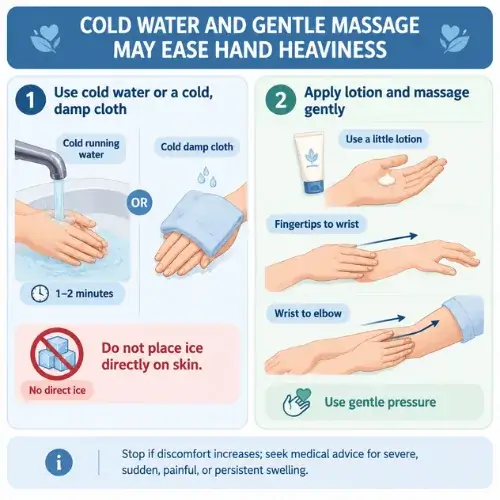
4. Cold Compress or Soak
Cold water will slightly constrict your blood vessels and can help reduce any feelings of heaviness. Try soaking your hands in cold running water for 1-2 minutes or place a cold damp cloth over them. Don’t place ice directly on your skin.
Some people prefer to have a quick warm soak to help reduce stiffness. Do whatever feels best for you. Don’t go to extreme temperatures. If your fingers go white/blue and are painful then stop.
5. Gently Massage Towards Your Heart
Gently massaging can help encourage fluid to move. Apply a little lotion and gently massage from your fingertips to your wrist and from your wrist to your elbow. Use gentle pressure as if you are smoothing cream onto your skin.
Massage each hand for 2-3 minutes. Don’t massage any areas that look red, feel hot or are painful. There is not much evidence but many people find this relaxing.
6. Limit Salty Foods and Alcohol
Salty foods will cause your body to retain water. Alcohol will dehydrate you and disrupt your sleep. This can cause noticeable swelling in your hands. The best time to be cautious is in the evening. The American Heart Association also explains how excess sodium can increase water retention and contribute to puffiness.
Try to have more fresh foods for dinner. Check labels on your soups and sauces. Finish your alcohol earlier or don’t have any. You don’t need to cut out your favourite foods. Often a small change will make a difference within a few days.
7. Drink Water Throughout the Day
Dehydration can make your body retain fluid. Try to have small sips of water throughout the day. A simple way to know is if your urine is a pale yellow colour.
Herbal teas and fruits with lots of water in will also help. If your doctor has told you to limit your fluids then follow their advice. Never limit your water intake to reduce swelling.
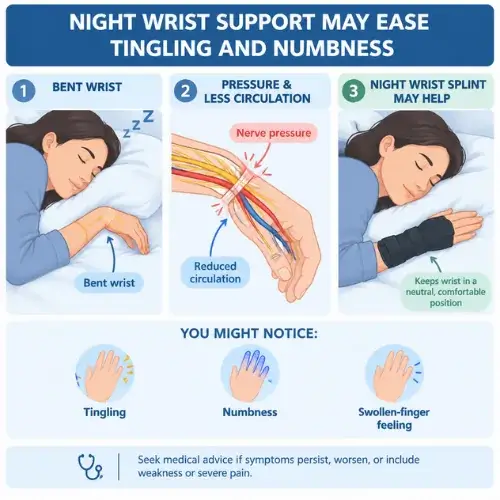
8. Support Your Wrists
Bent wrists can cause pressure on your nerves and reduce circulation. If you wake up with tingling, numbness or the feeling of swollen fingers then wearing a wrist splint at night may help.
These can be bought from pharmacies. Ask your doctor first to ensure it fits correctly. The AAOS also describes night splinting as a common way to help relieve carpal tunnel symptoms.
Try to sleep on your back or side with your hands relaxed by your side. Don’t curl your fingers into fists under your chin. Small changes can make you feel much lighter in the mornings.
9. Ask Your Doctor About Compression Gloves
Some people find light compression gloves can help reduce mild swelling. They gently compress your hand to help move the fluid up your arm. There is varying evidence and they won’t work for everyone.
If they don’t fit well they can cause pain and reduce circulation. Ask your doctor or hand therapist which type and pressure will work for you. Don’t wear them if your fingers go blue, numb or painful.
Swollen Fingers When Walking
Some people find their fingers swell when walking. This can happen on warmer days or long walks. Your blood vessels will widen to help you cool down. Swinging your arms can cause more blood and fluid to go to your hands. This is common and generally nothing to worry about. The Mayo Clinic also explains that hand swelling during exercise is common and may be related to changes in blood flow and the body’s response to heat.
Try to swing your arms in a relaxed manner. Open and close your hands every few minutes. Take your rings off before starting. Have some water during longer walks. If your hands remain swollen for hours after you have stopped then mention this to your doctor.
Understand More About Hand Swelling
Explore the connection between the lymphatic system and fluid movement in this video before deciding what questions to discuss with your healthcare provider.
Swollen Hands During Pregnancy
It is common to have mild swelling in your hands during pregnancy. Your body will have more fluid and blood. Many women will wake up with puffy hands, especially later in pregnancy. Often your hands and feet will swell.
The remedies above are generally safe to use for mild swelling. However, if you want to use a splint, compression or anything new then check with your midwife or doctor. A splint can help if you have symptoms of carpal tunnel due to your pregnancy.
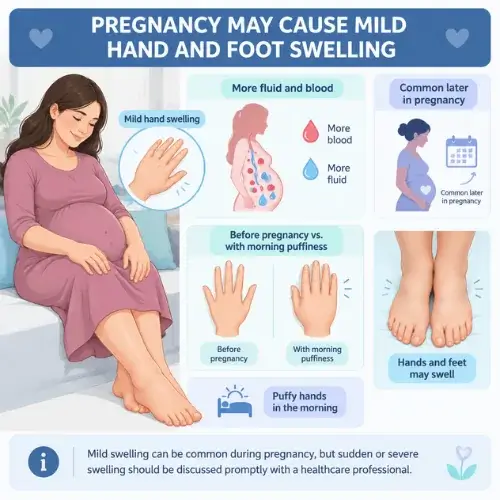
If you suddenly have swollen hands or face, severe headache, changes to your vision or pain under your ribs then this can be a sign of preeclampsia. Contact your midwife or doctor today. The ACOG lists sudden swelling of the hands or face, headaches and vision changes among possible warning signs of preeclampsia.
Simple Lifestyle Changes
Simple changes to your daily life can help your hands feel better. Take short breaks from typing, using your phone and gripping. Whilst on break gently stretch your fingers. Try to rest your forearms on a desk or armrest.
Wear loose cuffs and watch straps. Don’t have very hot showers or baths just before bed. Hot water will cause your blood vessels to widen which can cause more swelling. Try to keep a regular routine.
Simple Morning Routine for Puffy Hands
A short routine will help you get into a habit. You don’t need to do all 9. Choose what works for you.
- Take off your rings and place your arms on a pillow for 5 minutes.
- Open and close your hands 10 times. Move your wrists in circles.
- Soak your hands in cold water. Pat dry.
- Gently massage from your fingertips to your elbows.
- Have a glass of water and have a less salty breakfast.
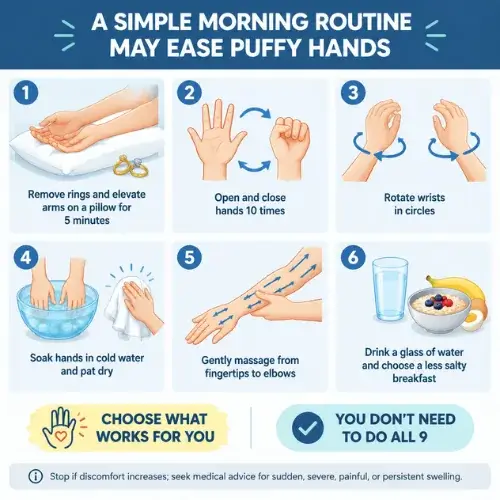
If you only occasionally wake up with puffy hands then this routine will usually help within an hour or two. If your hands remain swollen throughout the day or most mornings then keep a short diary. This will help your doctor see a pattern.
When to See a Doctor for Swollen Hands
Most mild swelling is nothing to worry about. However, if you experience any of the following then contact your doctor.
- Swelling throughout the day or most mornings for over 2 weeks.
- Sudden swelling or only one hand.
- Numbness, tingling or weakness in your fingers.
- Red, hot or painful joints.
- Severe headache, changes to vision or breathlessness with swelling.
- Swelling with swollen feet, puffy face or rapid weight gain.
Your doctor may check your joints, blood pressure and carry out blood or urine tests. Possible causes could be arthritis, carpal tunnel syndrome, thyroid problems and kidney, heart or liver issues. Bring your diary and list of medications. The MedlinePlus also explains that unexplained swelling may need medical assessment to identify its underlying cause.
Frequently Asked Questions About Waking Up With Puffy Hands
How Long Should My Hands Be Swollen in the Morning?
Mild swelling will often reduce within an hour or two of moving around. If your hands remain swollen for most of the day then you should seek medical advice. Keep a note of how long your hands are swollen for over the course of a week.
Can My Sleeping Position Really Make a Difference?
Yes for many people. Bent wrists and tucked arms can reduce circulation. Having your hands relaxed and open can help. Try one change at a time.
Should I Use a Warm or Cold Soak?
It depends on what feels comfortable to you. Cold water can help reduce any feelings of heaviness. Warm water can help reduce stiff joints.
Should I Stop Wearing My Rings?
No. Many women will just take them off at night and on days when their hands are swollen. If your rings keep getting tight then ask your jeweller to resize them. Ask your doctor about the swelling.
Getting Your Hands Comfortable Again
Waking up with swollen hands rarely means anything serious. Many mild cases are due to fluid redistribution overnight, salty foods, alcohol and sleeping position. Gentle remedies can often help your hands return to normal within a few hours.
If your hands remain swollen, suddenly swell or have other symptoms then it is best to seek medical advice. You deserve to wear your rings, grip your pen and start your day comfortably. A few simple changes tonight may help your hands feel lighter tomorrow.
What Could Your Swollen Fingers Be Telling You?
Discover why swollen hands and fingers may involve more than salty foods, heat, or everyday habits.
Watch the next video to explore the lymphatic system’s role in fluid movement and a simple check that may offer a new perspective.