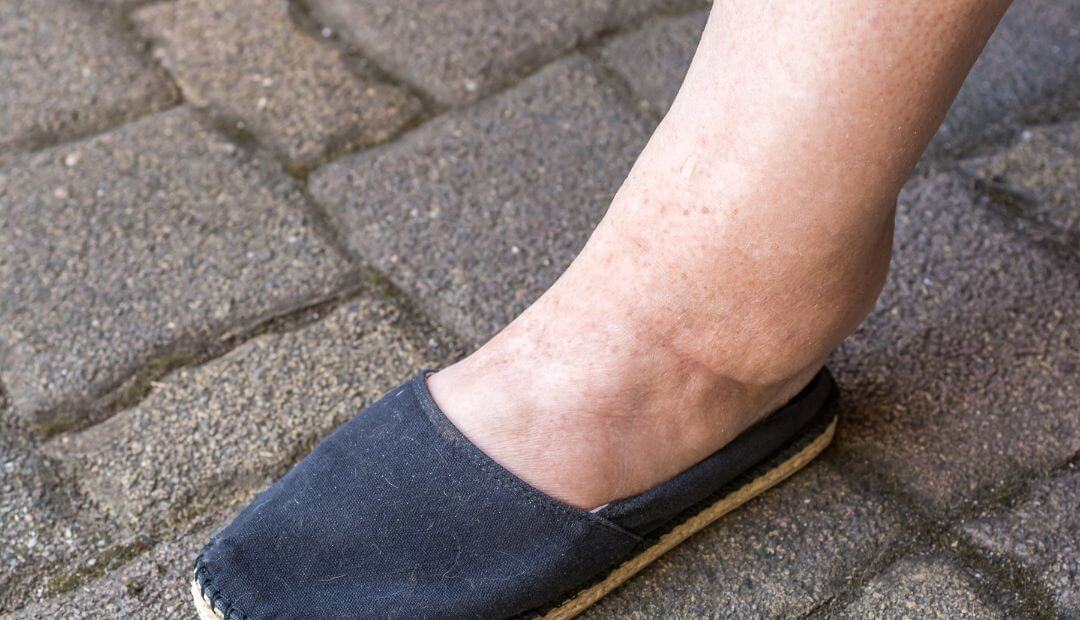
If you take your shoes off at the end of the day you may notice that your feet and ankles are swollen. Socks can leave deep lines and your ankle bones may look like they have disappeared. Many women will look to find out the swollen ankles causes and why their ankles are swollen.
Whether it is harmless or an indication of something more serious will depend on what is causing your swelling. This guide will help you understand what is going on and explore the most common swollen ankles causes.
You will learn why your lower legs are swelling. In particular, find out the most common reasons why your ankles are swollen, including everyday causes, circulation issues and organ related issues. You will also find out what signs to look out for and how to help. However, this is general information and should not be used as a diagnosis.
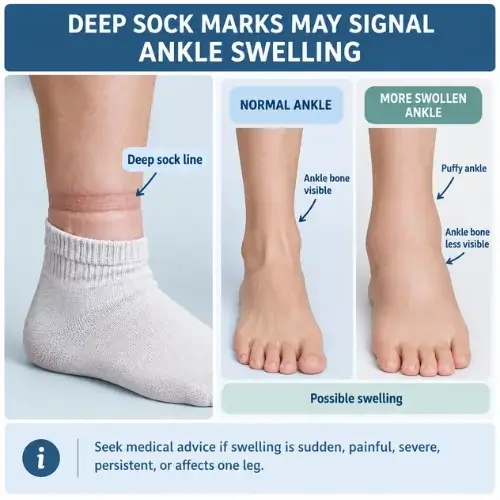
Your Ankles Disappear by the Evening
Swollen ankles are rarely painful but can cause problems throughout the day. For example, your shoes may feel tight, heels may dig into your feet and standing for long periods can be tiring. As a result, many women will stop wearing their favourite sandals or miss out on social events due to feeling their feet are heavy.
The uncertainty can make you feel as though your feet are swollen. You may be wondering if it is just tiredness, a heart issue or something you have caused. Meanwhile, friends will often tell you to elevate your feet.
By understanding what is causing your swollen ankles you will feel more in control. Fortunately, many cases are mild and simple lifestyle changes can ease them. However, a few cases require fast medical attention. The following sections will help you identify what is happening.
Swollen Ankles Causes: Why Are My Ankles Swollen?
A build up of fluid in the tissues is known as oedema. Because of gravity, fluid will pool in the lowest part of your body. This means your ankles and feet will swell first. If there is an imbalance between the vessels and the surrounding tissue, fluid will leak out. The NHS explains how this fluid buildup can cause swelling in the ankles, feet and legs.
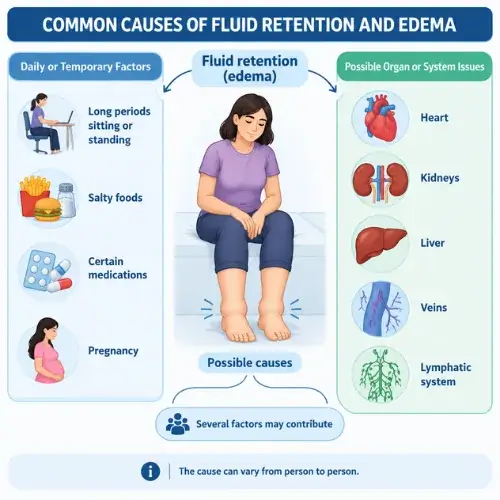
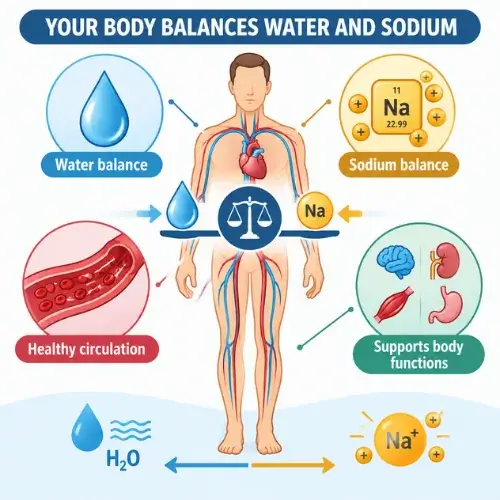
Several systems work together to keep this balance. Your heart pumps your blood, your veins return the blood up your legs and your lymphatic system drains excess fluid. In addition, your kidneys and proteins in your blood help control how much water your vessels hold.
If any of these systems stop working properly, your ankles can swell. Therefore, swollen ankles causes can have many types. These range from eating a salty meal to a serious organ related issue. The pattern will give you the best clue.
Could Fluid Balance Hold a Clue?
Read the next article to explore how fluid movement may relate to swollen ankles and discover a different way to look at this common concern.
Common Swollen Ankles Causes (Fluid Retention)
Sitting or Standing for Long Periods
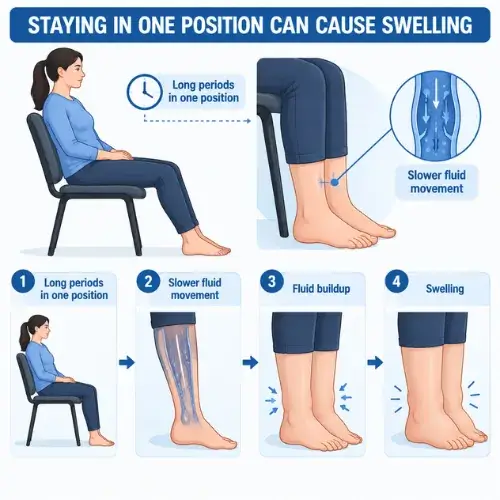
Sitting or standing still for long periods of time will cause fluid to pool. During this time, your calf muscles are not pumping your blood up your legs.
Consequently, many people who sit at a desk, nurses, teachers and travellers will notice swollen ankles causes in the evening. Taking regular breaks and doing some ankle exercises will help.
If this is what is causing your swollen ankles, simple changes to your daily routine will often make a noticeable difference. However, if your ankles remain swollen for a long time, you should seek medical advice. Also, if your ankles are painful or only one ankle is swollen, seek fast advice.
Salt, Heat & Hormones
Eating a salty meal will cause your body to retain extra water. As a result, some of this fluid will pool in your lower legs. Hot weather will also cause your blood vessels to widen, allowing extra fluid to leak into your tissues. Hormones can cause similar changes before your period.
This type of swelling will often affect both ankles equally. It will usually appear in the evening and ease overnight. It is rarely painful, and you may notice no changes to your skin. In many cases, it will improve within a few days.
Overweight & Lack of Exercise
Having extra weight on your body can put pressure on the veins in your pelvis and legs. This can slow the return of your blood. Similarly, lack of exercise can cause your calf muscles to weaken, which can lead to swelling.
Simple regular exercise such as walking, swimming or cycling will help with circulation. In addition, small changes to your weight may help if your doctor recommends them. Be patient, as it can take time to change.
Pregnancy
During pregnancy your blood and fluid volume increases. Meanwhile, the growing uterus can put pressure on the veins in your pelvis. It is common to have mild swelling in your ankles and feet. Try to rest with your feet elevated. The NHS pregnancy guidance explains why this type of swelling is common and when a sudden increase needs medical attention.
If your hands or face suddenly swell, this can be a sign of preeclampsia. Contact your midwife or doctor the same day. Similarly, if only one leg is swollen and painful, seek urgent advice.
Poor Circulation & Vein Issues
1.Chronic Venous Insufficiency
Your veins in your legs have small valves to help pump your blood upwards. When these valves become weak, fluid will pool in your lower legs. As a result, fluid leaks into the surrounding tissue. Doctors call this condition chronic venous insufficiency.
You may notice a heavy, aching feeling in your legs. In addition, your ankles will often swell more throughout the day. You may also see varicose veins.
The skin around your ankles may develop a brown colour. Over time, the skin can become dry, itchy and fragile. A doctor can confirm this by examining you and doing an ultrasound.
2.Deep Vein Thrombosis (Urgent)
A deep vein thrombosis (DVT) is a blood clot in a deep vein in your leg. This usually causes one leg to swell. The affected leg can also feel painful, sore, warm and red. Risk increases after surgery, long periods of immobility, pregnancy and some hormonal treatments.
The National Heart, Lung, and Blood Institute describes these warning signs and explains why a blood clot needs prompt medical attention.
If your leg suddenly swells on one side, seek urgent advice. More importantly, if you suddenly feel short of breath, have chest pain or notice a racing heart, contact emergency services. The clot may have travelled to your lungs. Do not massage a painful swollen leg.
3.Lymphatic Issues
The lymphatic system drains excess fluid from your tissues. However, damage or a blockage can cause swelling in your leg. This often happens after surgery, radiotherapy, infection or injury. The swelling is often firm and can slowly get worse.
A doctor or lymphedema therapist can confirm the cause. Treatment such as compression and specialised massage can help. Moreover, early treatment will help avoid skin changes. If one leg looks larger, do not wait.
Organ & Hormone Related Causes
1.Heart Failure
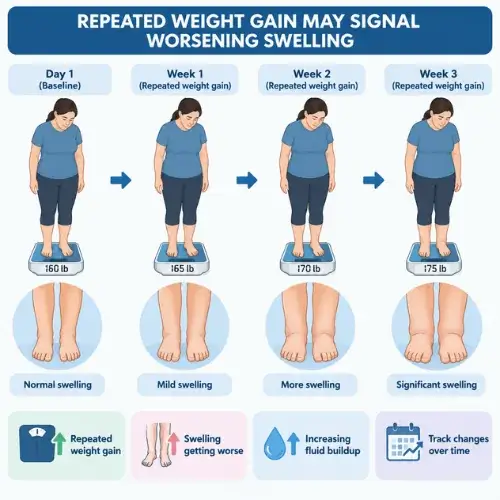
If your heart does not pump blood as well as it should, blood will build up in your veins. This can cause swelling in your legs and feet, often in both legs. It can also cause you to feel short of breath, tired and gain weight over a few days.
One warning sign is feeling short of breath when lying flat. The American Heart Association identifies swelling in the feet, ankles and legs as a possible sign of fluid buildup associated with heart failure.
These symptoms need prompt medical attention. A doctor will check your heart through an examination, blood tests, ECG or echocardiogram. Fortunately, early treatment can be very effective.
2.Kidney & Liver Disease
A healthy kidney will remove extra salt and water. However, if your kidneys struggle or leak protein into your urine, you can develop swelling in your ankles and sometimes around your eyes. You can also have foamy urine and feel tired.
According to the National Institute of Diabetes and Digestive and Kidney Diseases, kidney disease can cause fluid buildup and swelling in the legs, feet and ankles.
Liver disease can cause a lack of protein in your blood. This can increase pressure in your veins and cause your ankles and stomach to swell. A warning sign is yellow skin or eyes. You may also bruise easily and develop a swollen stomach. Both of these issues need a doctor’s assessment. Your doctor will arrange blood and urine tests.
3.Underactive Thyroid
An underactive thyroid will cause your metabolism to slow. Consequently, this can cause firm swelling in your legs. You may also feel tired and cold, with dry skin and constipation. A simple blood test will show if your thyroid is working. Treatment is usually straightforward.
Because thyroid issues develop slowly, many women will blame their symptoms on stress or ageing. If you have a few of these symptoms, ask your doctor to test you. Do not take thyroid supplements.
Understand the Clues Behind Swelling
Before dismissing persistent ankle swelling, Read the next article for a fresh look at fluid balance and the signals worth paying attention to.
Medications, Injury & Infection
1.Medications
Many medications can cause your ankles to swell. These include diuretics, some blood pressure medications (calcium channel blockers), anti-inflammatory painkillers, steroids, some diabetes medications and hormone treatments.
Swelling often occurs a few weeks after you start a new medication or increase the dose. Make sure to tell your doctor what medications and supplements you are taking.
Never stop taking a prescription medication. Instead, your doctor can often change the dose or prescribe an alternative. Take a full list of your medications.
2.Injury, Infection & Inflammation
If you twist your ankle or sprain it, you will notice swelling and bruising on the affected side. You will feel pain when moving or putting weight on the ankle.
Cellulitis is an infection of the skin that causes redness, warmth and soreness. Gout and arthritis can also cause sudden hot, painful swelling in your joints.
If only one side is swollen and red, seek fast medical advice. In particular, early treatment of infection will help avoid complications.
Patterns to Look For
Patterns can help you and your doctor identify why your ankles are swollen. Look at where the swelling is, how it behaves and any other symptoms. Common signs include:
- Both ankles are swollen and worse in the evening – Often due to fluid retention, sitting/standing for long periods, heat or weak veins.
- Only one ankle/leg is swollen – Injury, infection, clot or lymphatic issues. Seek fast advice.
- Pitting – This means there is fluid present. This can be due to vein, heart, kidney, liver or medications.
- Brown or shiny skin – Often due to long term vein issues.
- Shortness of breath or rapid weight gain – Heart or kidney involvement.
- Swelling after starting a new medication – May be due to medication.
These are just guidelines. To help your doctor, keep a short diary of when your ankles swell, how long the swelling lasts and any other changes.
Treatment for Swelling in Legs & Feet
The treatment will depend on what is causing your swollen ankles. If your ankles remain swollen for a long time, it is important to find out why. However, if everyday issues cause mild swelling, a few simple lifestyle changes can often help. These steps can improve circulation, but they will not treat the underlying issue.
- Elevate your legs above your heart for 15-30 minutes a few times per day.
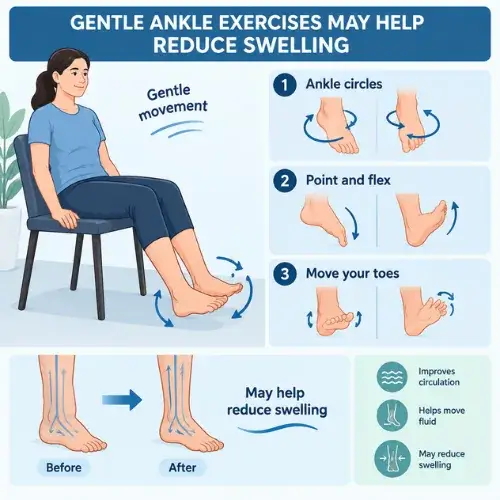
- Move regularly. Do some ankle rotations, calf raises and short walks.
- Reduce how much salt and processed food you eat.
- Wear comfortable shoes. Avoid tight socks or garters.
- Ask your doctor about compression stockings. Especially if you have heart or artery issues.
- Avoid crossing your legs for long periods.
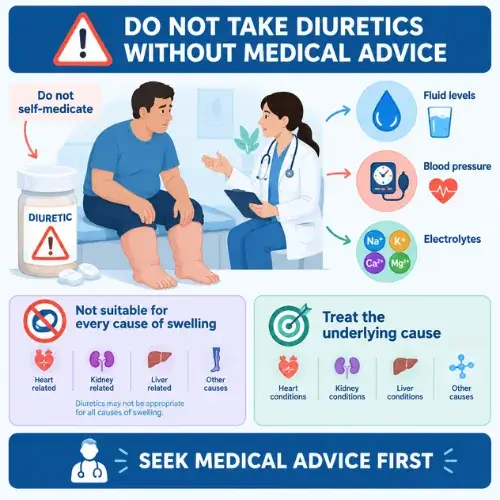
Avoid taking water tablets unless a doctor prescribes them. These can cause issues with your salts and kidneys. Also, avoid massaging a painful one sided swollen leg. If your ankles are not improving within a couple of weeks, book an appointment.
When to Seek Urgent or Fast Advice
Most swollen ankles are mild. However, some signs mean you should seek medical advice. If you suddenly feel short of breath, have chest pain or cough up blood, contact emergency services. The NHS pulmonary embolism guidance explains why these symptoms require urgent medical help. Also, seek fast advice if:
- Only one leg is swollen (especially if painful, warm or red).
- Swelling with shortness of breath (especially when lying flat).
- Swelling with fever, spreading redness or severe pain.
- Rapid weight gain over a few days with swelling.
- Swelling with yellow skin, dark urine or swollen stomach.
- Swelling during pregnancy with severe headache or vision changes.
- Swelling for longer than a couple of weeks or getting worse.
Your doctor will examine your legs, check your blood pressure and ask about your medications and symptoms. They may also arrange blood tests, urine tests or an ultrasound. Meanwhile, keeping a diary of your symptoms will help speed up the process.
Common Questions About Swollen Ankles Causes
Are swollen feet & ankles always serious?
No, many cases are mild and can be due to heat, salt, sitting for long periods or hormonal changes. However, if you develop new swelling that does not improve or comes with other symptoms, you should pay attention. If unsure, ask your doctor.
Why are my feet & ankles only swollen at night?
Due to gravity and standing/upright for long periods, fluid will pool during the day. If your ankles improve overnight, your daily habits may explain the swelling. However, if they are still swollen in the morning, take a closer look.
Can stress cause swollen ankles?
Stress hormones can cause fluid retention. In addition, stress often affects your sleep and eating. However, it is rarely the only cause. If your ankles remain swollen for a long time, look for other causes.
Finding the Cause & Feeling Better
There are many reasons why your ankles may be swollen. Fortunately, your body will often give you clues. The timing, whether it is both ankles, skin changes and other symptoms will help narrow down the cause. Simple home treatments can help with mild cases.
If your ankles are only swollen on one side, suddenly, painful or not improving, it is best to have a check up. Do not wait until it becomes severe. Your legs deserve some TLC!
What Could Your Swollen Ankles Causes Be Revealing?
Discover an overlooked clue that may help you better understand ankle swelling, fluid balance, and unexpected changes in your body.
Explore a simple five-second check and learn more about fluid movement and the signals your body may be giving you.