


You look in the mirror and your face looks different. Your eyes feel puffy, your cheeks have filled out, and your make-up doesn’t look the same. Many women will be wondering why they have swelling on the face and why their face is puffier.
But this is usually nothing to worry about! There are a few simple things you can do to help your face feel like it usually does. This guide will help you understand why your face is puffy, what the most common causes are and how to reduce it safely.
We’ll also provide you with any red flags you should look out for. This is not a substitute for a medical examination but can help you decide what to do next.
Why Is My Face Puffy? Understanding Swelling On The Face
Your face can often feel very personal as it’s the first thing people see. Many women will avoid taking photos, video calls or simply spend more time putting on concealer. You can also feel older or more tired than you actually are.
You may also feel worried by the puffiness. Are you allergic to something? Do you have a thyroid issue? Did you cause it? This can make you lose confidence.
However, knowing why your face is puffy can give you back control! Most mild cases will go away within a day or two. Many Common Causes are nothing to worry about. However, if you’re unsure, the rest can be discussed with a medical professional. We’ll show you how to know the difference below.
Why Does My Face Get Puffy Easily?
The skin on your face is quite thin, especially your eye area. This means there is plenty of space for fluid to build up. Your face also has lots of blood flow meaning it can react to changes in salt, hormones and allergies.
This fluid build up is known as edema. When it happens around the eye area it is called periorbital edema. It can also happen around your cheeks, jaw and lips.
Often where it happens can give you clues as to why. The Cleveland Clinic explains that facial swelling can have several causes, including allergies, infections and underlying medical conditions.
Could There Be Something Else?
Discover another angle to morning puffiness and learn how fluid movement could be affecting your face.
Common Causes Of Swelling On The Face
Salt, Fluid & Dehydration
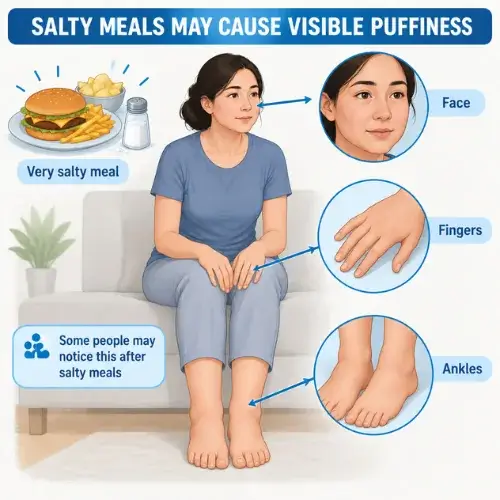
After eating a salty meal your body will retain more water. Some will build up in your face. Dehydration can cause the same issue. Your body will retain fluid when it senses it is low. Many people will notice this after a night of eating takeaways and not drinking enough water.
This usually goes away within a day. It will often be even on both sides of your face. You’re unlikely to experience any pain, redness or itchiness.
Alcohol
Drinking alcohol can cause your blood vessels to dilate and cause dehydration. This can cause your face to look flushed and puffy, especially around the eye area. Not sleeping well after drinking can also contribute.
Reducing how much you drink or having some with water can help. If you are getting puffy after just a little alcohol mention it to your doctor. It can occasionally indicate an allergy or intolerance.
Allergies & Blocked Sinuses
Seasonal allergies, dust, pet hair/dander or certain foods can cause swelling around your eyes and cheeks. You may also suffer with itchiness, watery eyes, sneezing or a blocked nose.
Blocked sinuses can also cause a heavy puffy feeling around your cheeks and eyes. The NHS identifies swollen eyes, lips, mouth or throat among the possible symptoms of an allergic reaction.
Mild swelling caused by allergies can often be improved by avoiding the cause and using treatments suggested by your pharmacist/doctor. However, if you are suddenly swelling around your lips, tongue or throat this needs to be treated as an emergency. Don’t wait for it to settle.
Hormonal Causes (Females)
Many women will get puffy faces due to their hormones. Estrogen and Progesterone can affect how your body retains salt and water. Many women will notice their face becoming rounder and puffy in the days leading up to their period. This will usually settle once they start bleeding.
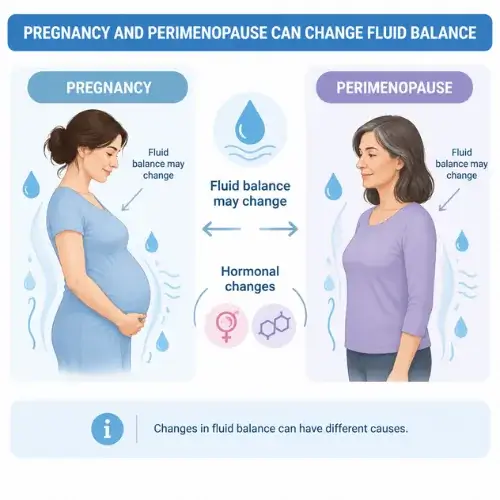
During pregnancy and perimenopause your fluid balance can change. You may notice mild swelling but if you are suddenly swelling during pregnancy, especially in your hands and face, along with a severe headache or changes in your vision this could be a sign of preeclampsia.
The NHS lists sudden swelling of the face, hands or feet among the warning signs that need immediate medical assessment. Contact your doctor/midwife the same day.
Crying, Tiredness & Contact Dermatitis
If you’ve been crying, tired or rubbing your eyes your eyes can become swollen and sore. Lack of sleep can also cause your skin to lose its tone causing your face to look puffier. New make-up or skin products can cause contact dermatitis.
If you’ve noticed swelling shortly after using a new product stop using it. Gently rinse your face with water. If you still have any redness, itchiness or swelling see a doctor.
Medical Causes Of Swelling On The Face
Sometimes a puffy face can indicate an underlying health issue. Doctors can often work out the cause by looking at how often it happens, when it happens and any additional symptoms. Below are the most commonly mentioned causes.
Thyroid Issues
An underactive thyroid can cause your metabolism to slow down. This can cause your tissues to retain extra water and salt. You may notice a puffy face, especially around your eyes. You may also feel tired, cold, have dry skin and constipation. A simple blood test can check if your thyroid is working properly. According to MedlinePlus, a puffy face, fatigue, cold intolerance and constipation can all occur with hypothyroidism.
Swelling caused by thyroid issues will often build up over weeks or months. It will not settle after a good nights sleep. If this sounds like your issue ask your doctor to test you. Once the cause is known treatment is usually straightforward.
Kidney, Heart & Liver Issues
Kidney issues can cause protein to leak into your urine causing fluid to build up. Classic early signs are swelling around your eyes. Often accompanied by puffy ankles and foamy urine. Heart and liver issues can also cause fluid retention. The NIDDK describes puffy eyelids, swelling and foamy urine among the possible symptoms of nephrotic syndrome.
These issues will usually cause other symptoms such as breathlessness, tiredness or changes to urinating. If you are experiencing persistent swelling and any of these symptoms it’s a good idea to see a medical professional. Blood and urine tests can help identify what is going on.
Steroids, Hormonal Disorders & Medication
Long-term use of steroids can cause your face to become round and puffy. Hormonal disorders such as Cushing syndrome can also cause this. Some blood pressure medications and anti-inflammatory painkillers can cause you to retain fluid. Be sure to mention all medication and supplements you are taking to your doctor.
Never stop taking any prescription medication. Often your doctor will be able to adjust the dose or suggest an alternative. Try to bring some photos of your face from a few months ago as changes will often be slow to notice.
Infections & Dental Issues
A tooth abscess or skin infection can cause swelling to one side of your face. This is often painful, warm to touch and sometimes with a temperature. This will feel different to fluid puffiness.
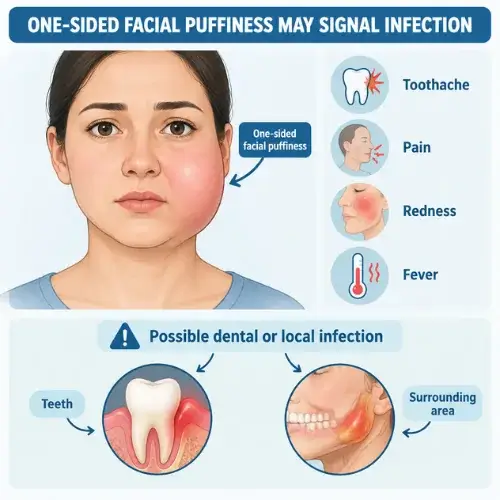
If you are suffering with one sided swelling and pain you should seek prompt treatment from a dentist/medical professional. The NHS confirms that a dental abscess can cause facial or jaw swelling and requires urgent dental treatment.
Don’t try to pop or drain any swelling. Infections can spread. Early treatment will prevent any complications. If swelling is spreading towards your eye/neck or you are struggling to swallow contact urgent care.
What Your Face May Be Telling You
Explore how fluid balance and everyday habits may contribute to facial puffiness, and discover another perspective you may not have considered.
Simple Ways To Reduce Puffiness At Home
For common puffiness gentle treatments can help within a few hours. These are best for mild and pain free puffiness. If anything feels worse stop and seek advice.
- Apply a cool, damp clean cloth to your eyes and cheeks for a few minutes.
- Gently massage your face with clean fingers. Move from the middle of your face outwards.
- Try to elevate your head.
- Drink plenty of water throughout the day. Dehydration can cause puffiness.
- Eat more fresh foods and avoid very salty snacks for a couple of days.
- If you have allergies rinse your face after being around pollen. Ask your pharmacist for allergy relief.
Avoid applying ice directly to your skin. This can cause irritation. Avoid harsh scrubs and heavy eye creams whilst swollen. If anything stings, burns or makes redness worse stop using.
There is limited evidence to support massaging and cooling devices. They may help your face look and feel better for a short amount of time but won’t help you find the cause of recurring puffiness.
5 Minute Morning Routine For A Puffy Face
Mornings can be the worst when you have a puffy face. A quick routine can help you start your day calmly. Choose treatments that feel relaxing. Avoid anything that will irritate.
- Have a glass of water before your coffee.
- Splash some cool water on your face and pat dry.
- Place a cool damp cloth over your eyes for 2 minutes.
- Gently stroke upwards along your cheeks and jaw.
- Have a low salt breakfast such as fruit, yogurt or eggs.
Most mild puffiness will go within an hour or two. If it is still present in the afternoon or every day keep a short diary noting what you have eaten (salt), drunk (alcohol), how much you’ve slept, your cycle and if you’ve used any new products. Share this with your doctor.
Simple Ways To Help Prevent Puffiness
The best way to prevent puffiness is to make it feel easy. Often making small changes to your lifestyle over a few weeks can help reduce puffiness. You don’t need to be strict – just make a few consistent choices.
Limit salty foods and alcohol, especially the night before important days. Drink plenty of water and try to get into a routine. Be aware of what foods/products or seasons cause your puffiness.
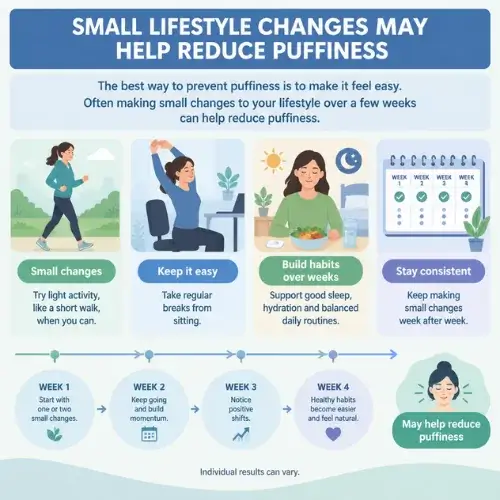
Take off your make-up gently. If your skin is sensitive stick to unscented products. Wash your pillowcases weekly. This will reduce irritation and allergens around your face. Over time this will help your flare ups be more predictable.
When To Seek Urgent Treatment For Swelling On The Face
Most puffiness isn’t serious but if you are swelling around your lips, tongue or throat you should call emergency services. The NHS explains that sudden swelling affecting the lips, tongue, mouth or throat can be a sign of angioedema and may require emergency treatment. If you are experiencing any of the following seek prompt medical attention.
- Sudden or rapid swelling.
- One sided swelling with pain, warmth or temperature.
- Swelling with severe headache, vision changes or high blood pressure (especially if pregnant).
- Swelling with breathlessness, chest pains or swollen legs.
- Puffiness lasting longer than a couple of weeks with no cause.
- New swelling after starting a medication or being stung by an insect.
Your doctor will ask when it happened, what medications you’re on, allergies and any other symptoms. They may check your blood pressure and run some blood/urine tests. The more information you can give them about when it started and what has changed the quicker they can work it out.
Common Questions About Swelling On The Face
Can stress make my face puffy?
Stress can cause changes to your sleep, appetite and hormones meaning your face can look puffier. However this is rarely the only cause. If you are still experiencing puffiness despite improving your sleep and lifestyle speak to your doctor to investigate further.
How long will my face be swollen?
Salt, alcohol or lack of sleep can cause mild swelling which will often settle within a day. Hormones can cause puffiness which can last a few days before your period. If your face is swollen for longer than a couple of weeks see a medical professional.
Do cold spoons/ice rollers work?
Cool tools can cause your blood vessels to constrict temporarily making your face feel refreshed. However this is only a temporary solution. Wrap any very cold items in a thin cloth.
Get Back To Feeling Confident With Your Face
Although your face feeling puffy can feel loud in the mirror, it is often due to a simple and manageable cause. Most mild cases will be due to salt, alcohol, allergies, hormones and sleep. Gentle treatments and patience will usually get your face back to how it usually looks.
If you are experiencing sudden, one sided, painful or persistent swelling it’s best to see a medical professional to ensure you’re okay. Don’t wait until it gets bad. Your face deserves some TLC!
Could There Be Another Reason For Your Morning Puffiness?
Discover how fluid movement could be linked to your puffiness and other changes. Learn why your symptoms could have different causes.
Learn more about fluid balance and the lymphatic system. Don’t assume there is one cause for your symptoms.