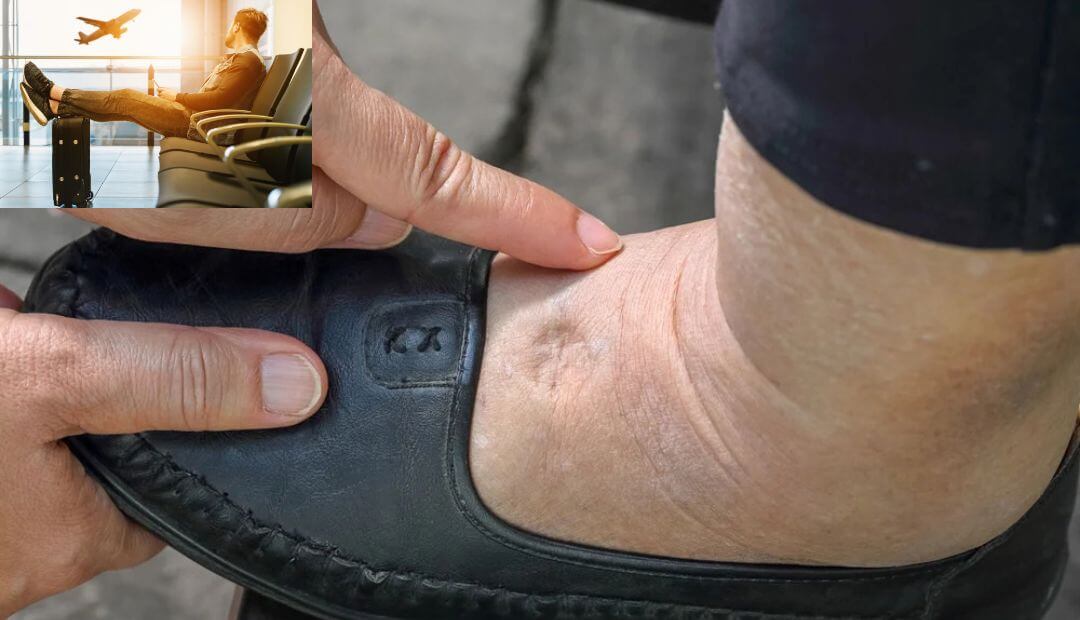
The seatbelt light has turned off so it’s time to put your shoes on. But why won’t they fit? You may have swollen feet after flying. Many people experience swollen feet after flying but they can often be exaggerated. Here’s how to make the process from boarding to recovery more comfortable with less swollen legs.
We’ve broken down this guide into sections to help you throughout your journey. We’ve included who is most likely to experience swollen feet, how long they should last and what signs to look out for that need urgent attention. This is a general guide and shouldn’t be used as a diagnosis.
Swollen Feet After Flying: 2 Travelers, 1 Flight
Imagine two ladies going on a 10hr flight. One sits down and enjoys a glass of wine with their meal. Their feet are tucked under the seat. The other lady is wearing light compression socks, walks up and down the aisle twice and drinks water throughout.
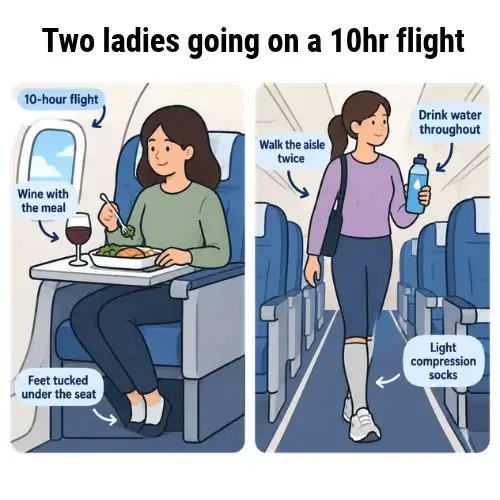
At the end of the flight the first lady will struggle to get her shoes on. Whilst the second lady will feel slightly tired. Everyone’s bodies are different but there are definitely things you can do to help. This is why we have focused on small things you can do.
You don’t have to be perfect! Making just one or two changes such as walking more and drinking more water will help you when you arrive. Start with something you can realistically do.
Preparing for Swollen Feet After Flying
Spend 5 mins preparing. Wear loose clothing and easy on/off shoes. Pack a small bag with everything you’ll need.
- Light-Moderate Compression Socks (wear before your feet start to swell)
- Empty reusable bottle to fill after security.
- Easy on/off shoes (half a size bigger than usual) or loose trainers.
- Low salt snacks (such as fruit and plain nuts).
- Medications in your hand luggage. Note any medical conditions.
Sit in an aisle seat if possible. If you have a medical condition or a history of clots talk to your doctor to see if compression socks are suitable and what else you should do. The CDC travel guidance also recommends discussing personal clotting risks with a doctor before a long journey.
Preventing Swollen Feet After Flying During Flight
The main reason for swollen feet after flying is due to sitting for long periods of time. Your calf muscles act as a pump but only work if you use them. Complete this simple routine every hour. The CDC travel advice also recommends moving your legs frequently and exercising your calf muscles during long trips.
- Ankle pumps – Point your toes towards your face then down 20 times.
- Ankle circles – Make slow circles with each foot 10 times in each direction.
- Knee lifts – Lift your knees slightly off the seat 10 times.
- Calf raises – Press the balls of your feet into the floor and lift your heels 15 times.
Walk up and down the aisle for a few minutes when the seatbelt light is off.
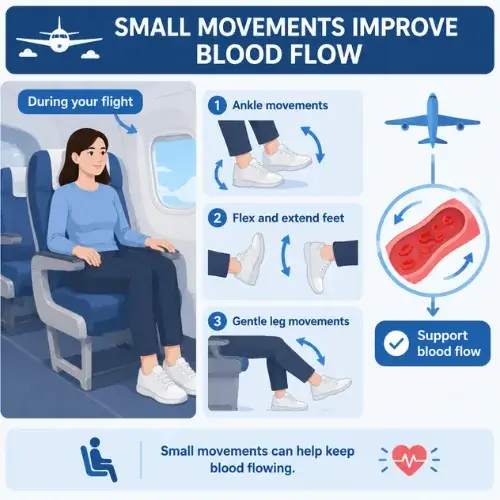
Avoid crossing your legs as this can restrict blood flow behind your knees. Keep your feet flat on the floor or on a small bag. Don’t put large bags under the seat in front of you as this will reduce leg space.
Drinks and Food
The air on the plane is very dry so you will lose more water than you think. Try to drink regularly. Avoid alcohol and heavy caffeine as they can dehydrate you and affect your sleep.
Plane food can be high in salt. Whilst you can’t control what you’re eating try to avoid salty additions and choose fresh fruit. Eating a lighter meal with less salt will help your body retain less fluid.
Understand What Triggers Flight-Related Swelling
Watch the video to explore how prolonged sitting may affect fluid movement and why your ankles can swell after a long flight.
Compression Socks for Swollen Feet After Flying
Compression socks gently compress your legs with the most pressure at the ankle. This helps your veins to push the blood up. Many travelers find this one of the most helpful tools. A review published by Cochrane found that compression stockings can reduce leg swelling during long flights.
Look for graduated compression socks with a travel label. They should be light to moderate. Measure your ankles and calves in the morning and follow the sizing chart. If they’re not a good fit they can cause discomfort. Wear them before you leave home as your legs will be least swollen.
Take them off at the end of the day. Check your skin and wash them as per the label. If you feel any numbness, tingling or pain stop wearing them. If you have any heart issues, poor arterial circulation or reduced feeling in your feet due to diabetes talk to your doctor first.
Within the first hour
- Try to walk as much as possible. Walking for 15-20 mins will get your circulation going again.
- Wear your compression socks.
- Have a large glass of water.
- Lie down and elevate your legs above your heart for 15-30 mins.
- Rinse your feet and ankles in cool or warm water.
- Wear loose shoes or sandals.
Gently massage your legs with long strokes from your ankle to knee. Only use gentle pressure. If your leg is painful, red or swollen on one side avoid massaging. Avoid very hot baths as this can cause your blood vessels to dilate and cause more swelling. Keep the water a comfortable temperature.
How Long Do Swollen Feet After Flying Last?
Most travelers will notice their swelling reduce within a day or two. Elevating your legs whilst sleeping, staying active and keeping hydrated will help reduce swelling. Some mild puffiness may last a few days if you’ve had a very long journey.
| Time | Usually Normal | What to do |
|---|---|---|
| Immediately after landing | Tight shoes, swollen ankles and heavy legs. | Walk, stay hydrated and elevate your legs. |
| Day 1 | Mild swelling. Swelling will reduce after a nights sleep. | Stay active and keep salt levels moderate. |
| Days 2-3 | Puffiness reducing. Usually gone by evening. | Stay active and wear comfortable shoes. |
| After approx 1 week | Swelling should have gone. | If still swollen see your doctor. |
If your legs are still swollen after about a week or if they start to swell with pain, warmth or redness you should get checked by a medical professional. Let your doctor know you’ve been on a flight so they can gauge how risky it is.
Why Do You Get Swollen Feet After Flying?
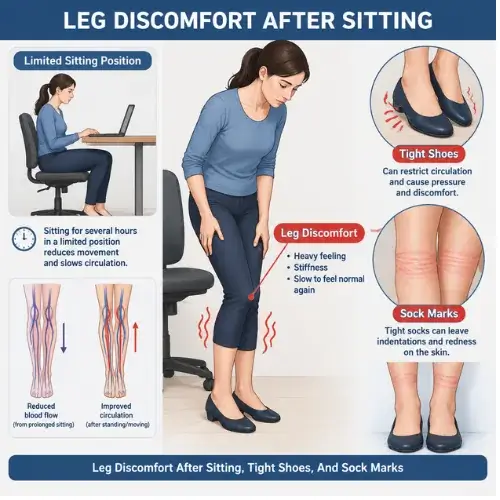
Sitting for long periods of time allows gravity to pull fluid down to your feet and ankles. Without your calf muscles squeezing your veins your blood will not return as quickly. This is made worse by the dry air, salty food and alcohol. The Mayo Clinic explains that sitting still during a flight can cause blood to pool in the leg veins, contributing to foot and ankle swelling.
The reduced air pressure in the cabin may also contribute. Researchers are still looking into how much this contributes. Warm cabins and tight shoes will make you feel more puffy. For most people this is just a mild fluid shift.
Who Is More Likely to Get Swollen Feet After Flying?
Some travelers may notice more swelling. If you’re pregnant, older, overweight, have vein issues or a history of heart or kidney issues you are more likely to get swollen feet. Some medications can contribute such as some blood pressure medications and hormone therapies.
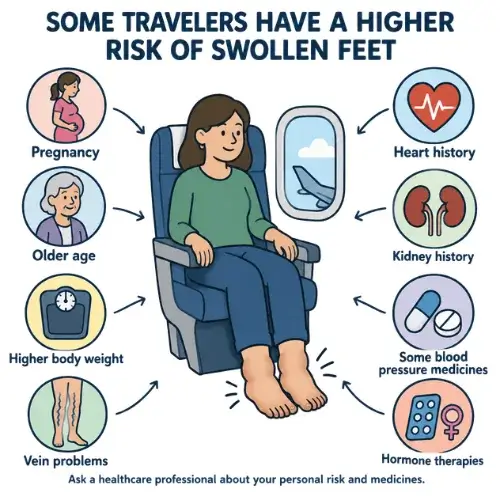
The CDC risk factors guide explains how age, obesity, hormone use and certain medical conditions can increase the risk of blood clots.
Flights over 4 hours have a higher chance of swollen feet and clots. Hot weather at your destination can also contribute. If you fall into one of these categories plan to be more active and talk to your doctor.
When to Worry About Swollen Feet After Flying?
Blood clots can be a rare but serious issue after long journeys. Usually one leg will swell due to a clot. Often there will be pain, warmth or redness in your calf. Sometimes the clots can travel to your lungs which is an emergency. The CDC blood clot information describes these warning signs and explains when to seek medical attention.
If you suddenly feel breathless, chest pain, a racing heart or coughing up blood get urgent attention. If just one leg is swollen, painful in the calf or looks red and warm call your doctor the same day. Symptoms can happen days or even weeks after your flight.
Avoid massaging a painful and swollen calf. If you’re experiencing swelling with breathlessness when lying down or rapid weight gain seek advice as this can be caused by heart or kidney issues. Trust your instincts and call if you’re unsure.
Help Your Feet Recover After Flying
Watch the video for more insight into fluid movement and explore practical ways to support comfortable movement after sitting for hours.
Common Myths
Myth1: Only people who aren’t fit will get swollen feet.
Being fit will help your circulation but everyone will be affected by sitting. Even athletes can have swollen ankles.
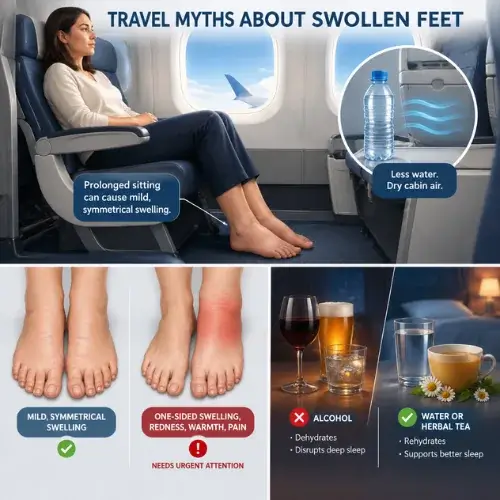
Myth2: Don’t drink as much to prevent swelling.
This can backfire as the air is very dry. Try to drink regularly unless told otherwise by your doctor.
Myth3: Swelling means you have a clot.
Most swelling will be mild and symmetrical. It should go down within a few days. Clots usually cause one sided pain, warmth or redness. They need urgent attention.
Myth4: Alcohol will help you sleep.
Although you may feel sleepy it will dehydrate you and affect your deep sleep. Try to have water or herbal tea. The American Heart Association also recommends staying hydrated and avoiding alcohol during travel as part of general steps to reduce clot risk.
Quick Tips for Regular Flyers
Do compression socks help?
Studies suggest graduated compression socks will help reduce swelling in your legs on long flights. They work best if worn before your flight. If you have any heart, artery or nerve issues talk to your doctor first.
Should I take my shoes off?
Whilst it can feel comfortable to take your shoes off your feet may be too swollen to put them back on. Wear easy on/off shoes or untie your laces. Never walk barefoot in the cabin or bathroom.
Should I take a water pill?
Avoid taking a water pill unless prescribed by your doctor. They can dehydrate you and cause issues with your salts. Try to stay active and hydrated.
Special Circumstances
Pregnant travelers
Pregnant travelers are more likely to swell. Check with your airline and talk to your midwife/doctor. Try to walk regularly, drink lots of water and ask about compression socks. If you suddenly start to swell in your face or hands call for advice.
Short flights
Short flights can still cause swollen feet. Often you’ll be sitting for long periods of time before and after boarding. Try to treat the whole journey as sitting time. Try to stand up, stretch and walk.
Long layovers
Try to walk around the terminal. If possible lie on a bench and elevate your legs. Try to walk for a short amount of time every hour.
Land Comfortable and Recover Quickly
Swollen feet after flying are very common and rarely a problem. Just a little preparation, staying active, keeping hydrated and having a good first hour will make a big difference. Knowing the signs to look out for will help you relax.
Next time you hear the seatbelt light go off you’ll know exactly what to do. Ankle circles, stand up and walk. Your legs will thank you!
What Your Swollen Ankles May Reveal After Flying
A long flight may explain the swelling, but what if the same pattern appears during your everyday routine?
Watch the video to explore a simple five-second check and discover how fluid movement may relate to recurring swelling.