


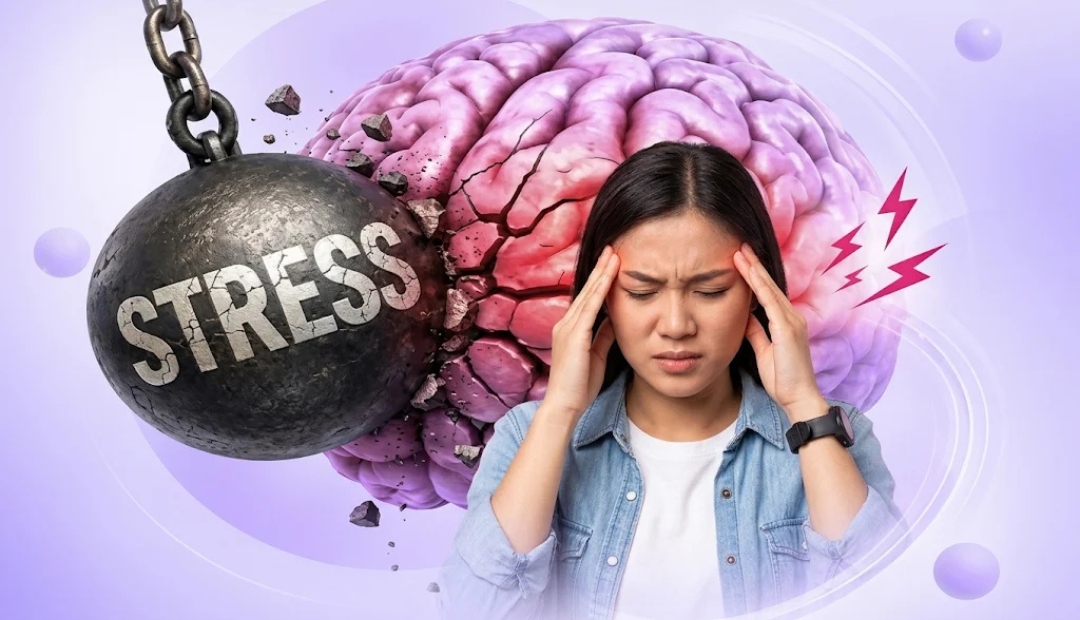
You wake up thinking about work, spend the day handling responsibilities, and go to bed worrying about tomorrow. Even when nothing urgent is happening, your mind may continue reviewing problems and anticipating what could go wrong. If this sounds familiar, chronic stress may be affecting more than your mood; it may also be influencing how your brain handles memory, concentration, and sleep.
Many adults experience this pattern while balancing careers, financial pressures, family responsibilities, and personal concerns. At first, you might simply feel tired or distracted, but gradually, everyday tasks can become harder to manage. You may forget small details, struggle to focus during conversations, or lie awake because your thoughts refuse to settle.
Understanding how chronic stress affects the brain can help explain why these experiences happen. It can also help you recognize which habits may support recovery and when professional guidance becomes important. Although prolonged stress deserves attention, its effects do not mean that your brain is permanently damaged.
What Is Chronic Stress and Why Does It Matter?
Stress is the body’s natural response to situations that feel challenging, demanding, or threatening. It activates systems that prepare you to respond, including changes in heart rate, breathing, alertness, and hormone release. This response can be useful when you need to meet a deadline, solve a problem, or react quickly.
Understand The Hidden Impact
Discover another perspective on how chronic stress may influence memory, focus, and everyday mental performance.
The difficulty begins when stressful demands continue without enough opportunity for recovery. Instead of returning to a calmer state, your body and mind may remain on high alert for extended periods. This ongoing pattern is commonly called chronic stress.
Chronic stress can develop from many sources, including financial uncertainty, demanding jobs, relationship difficulties, caregiving, and ongoing health concerns. Sometimes, no single problem feels overwhelming, but several responsibilities accumulate until you rarely experience a genuine mental break. The Centers for Disease Control and Prevention explains that long-term stress can affect emotional well-being, concentration, sleep, and physical health.
How Chronic Stress Keeps Your Brain on Alert
When your brain detects a possible threat, it activates a coordinated stress response. The hypothalamus communicates with other parts of the body, helping trigger the release of hormones such as cortisol. These changes help mobilize energy and prepare you to respond to demanding situations.
Cortisol is not inherently harmful, and your body needs it for several normal functions. Its levels naturally change throughout the day and respond to different situations. Problems may arise when stress systems remain repeatedly activated and recovery becomes insufficient.
Over time, persistent stress can influence brain systems involved in emotional regulation, memory, and decision-making. Researchers have studied how stress hormones interact with areas such as the hippocampus, amygdala, and prefrontal cortex. However, individual responses vary, and findings from animal studies do not always translate directly into predictable effects in humans.
How Chronic Stress Affects the Brain’s Memory Systems
Have you ever walked into a room and forgotten why you went there? Perhaps you misplaced your keys, overlooked an appointment, or struggled to remember something someone just told you. When these moments happen repeatedly, it is understandable to wonder whether your memory is becoming worse.
Stress can interfere with the mental processes that help you pay attention, organize information, and retrieve memories. Sometimes, the problem begins before information reaches long-term memory. If your attention is divided by worries, you may not fully register what you are trying to remember.
The hippocampus plays an important role in forming and retrieving certain types of memories. Research suggests that prolonged stress can influence hippocampal function and related brain processes. A scientific review available through NCBI Bookshelf discusses how stress can affect memory systems and brain regions involved in learning.
Why Chronic Stress Can Make Everyday Forgetfulness Worse
Imagine trying to remember instructions while thinking about an unpaid bill and an upcoming work deadline. Your brain must divide its attention between the conversation and several competing concerns. You may remember the general discussion but forget a specific detail because you never fully processed it.
This is one reason stress-related forgetfulness can feel unpredictable. You might remember an important event from years ago but struggle to recall what you planned to buy at the grocery store. These experiences do not automatically indicate permanent memory loss or a neurological disease.
Sleep also plays an important role in memory. When stress disrupts your sleep, your brain may have fewer opportunities to support the processes involved in learning and memory consolidation. This can create a frustrating cycle in which stress affects sleep, and poor sleep makes daily thinking more difficult.
How Chronic Stress Affects Focus and Decision-Making
Another common experience is difficulty concentrating, even when you genuinely want to finish a task. You open an email, read a few lines, and suddenly remember something unrelated that needs attention. Before long, you have spent several minutes switching between tasks without completing much.
The prefrontal cortex helps support functions such as planning, attention, working memory, and decision-making. These abilities allow you to organize information, control impulses, and adjust your behavior when circumstances change. Research indicates that stress can interfere with some of these functions, particularly when demands become intense or prolonged.
Explore What Happens Inside
Learn about an intriguing approach to understanding brain activity, mental fatigue, and the effects of prolonged stress.
A review published in Frontiers in Neuroendocrinology examines how stress influences brain regions involved in memory, emotional responses, and executive functioning. The findings help explain why prolonged pressure can make complex tasks feel more demanding.
Why Simple Decisions Can Suddenly Feel Exhausting
When your mind is already occupied, even ordinary decisions can require more effort. Choosing what to cook, responding to a message, or deciding which task deserves attention may feel surprisingly difficult. You might postpone decisions because you feel mentally exhausted before you even begin.
Stress can also encourage repetitive thinking, sometimes called rumination. Instead of moving toward a solution, you repeatedly review the same problem or imagine negative outcomes. This pattern consumes attention without necessarily helping you make progress.
Over time, you may begin doubting your ability to think clearly or manage responsibilities. Recognizing the possible role of stress can help you respond more constructively. Rather than criticizing yourself, consider whether your mental workload needs to become more manageable.
The Connection Between Chronic Stress and Sleep Problems
For many people, bedtime is when the effects of stress become most noticeable. During the day, work, conversations, and household responsibilities keep the mind occupied. Once the surroundings become quiet, unfinished tasks and worries may suddenly demand attention.
You might feel physically exhausted but mentally alert. Perhaps you replay a difficult conversation, calculate expenses, or prepare for a meeting that will not happen until morning. The longer you remain awake, the more frustrated you may become about not sleeping.
Stress can increase alertness and make it harder to fall asleep or remain asleep. The Sleep Foundation’s guide to stress and insomnia explains how stress and sleep difficulties can reinforce each other. Poor sleep can then make it harder to manage emotional and everyday challenges.
How Poor Sleep Can Intensify the Effects of Stress
Insufficient sleep can affect attention, emotional regulation, and the ability to handle frustration. You may become more sensitive to ordinary problems or find it harder to remain patient with family members. Tasks that normally feel manageable can seem unusually demanding.
This creates a cycle that can be difficult to break. Stress makes it harder to sleep, while sleep loss can increase emotional reactivity and reduce your ability to cope. If this pattern continues, both your daytime functioning and your sense of well-being may suffer.
Improving sleep habits can help, but persistent insomnia sometimes requires specific treatment. Cognitive behavioral therapy for insomnia, often called CBT-I, is an established treatment approach. A healthcare professional can help determine whether sleep problems relate to stress, another condition, or a combination of factors.
Other Ways Chronic Stress Can Affect Your Daily Life
The effects of chronic stress are not limited to memory, concentration, and sleep. You may notice changes in your appetite, energy, mood, or interest in activities you previously enjoyed. Some people experience headaches, muscle tension, digestive discomfort, or frequent feelings of irritability.
Stress can also influence how you interact with other people. You may become impatient during conversations, withdraw from social activities, or feel overwhelmed by requests that once seemed reasonable. These changes can create additional tension at home and work.
The MedlinePlus guide to stress describes several possible effects of prolonged stress, including sleep difficulties, headaches, digestive problems, and emotional changes. These symptoms can have other causes, so they should not automatically be attributed to stress.
Why You May Not Notice the Effects Immediately
Chronic stress often develops gradually rather than appearing as one dramatic event. You may become accustomed to feeling tense, checking messages constantly, or thinking about work after hours. Because these habits become part of your routine, you might not realize how much pressure you are carrying.
Sometimes, people only recognize the problem when their usual coping methods stop working. They may notice increasing forgetfulness, declining patience, or difficulty relaxing during weekends. These changes can serve as useful signals that something in their routine needs attention.
Discover A Different Perspective
Explore how brain activity connects with concentration and mental clarity, and what may help you feel more focused.
Paying attention to these signals does not mean assuming the worst. It means taking your well-being seriously before exhaustion becomes your normal state. A few realistic changes may help reduce some of the pressure, even when you cannot remove every source of stress.
Practical Ways to Reduce Chronic Stress and Support Brain Health
You may not be able to eliminate financial responsibilities, work deadlines, or family demands. However, you can develop habits that give your mind and body more opportunities to recover. The most useful approach is usually a combination of manageable changes rather than one dramatic lifestyle adjustment.
Start with habits that fit your actual schedule. A routine that requires too much time or effort can become another source of pressure. Small actions practiced consistently may be easier to maintain and more helpful over the long term.
1. Build Short Breaks Into Your Day
Working continuously can make it harder to maintain attention, especially when several tasks compete for your focus. Try taking short breaks between demanding activities instead of waiting until you feel completely exhausted. Step away from your screen, stretch, or spend a few minutes somewhere quieter.
Use these breaks to give your attention a chance to recover. Avoid filling every spare moment with social media, news, or additional messages. Even a brief period without new information can make your day feel less mentally crowded.
2. Use Physical Activity to Manage Stress
Walking, cycling, swimming, and other forms of movement can support physical and emotional health. You do not need to begin with an intense exercise program. A comfortable walk after work may be a practical starting point.
Choose an activity that you enjoy and can repeat regularly. If your schedule is demanding, divide movement into shorter sessions throughout the day. Consistency is more important than pushing yourself beyond your current ability.
3. Practice Relaxation and Mindfulness
Slow breathing, meditation, and progressive muscle relaxation can help some people manage stress. These practices encourage you to shift attention away from repeated worries and toward the present moment. They do not require you to stop every thought or force yourself to feel calm immediately.
Begin with a few minutes in a comfortable position. Notice your breathing or gently release tension in your shoulders and jaw. When distracting thoughts appear, acknowledge them and return your attention to the exercise.
The National Center for Complementary and Integrative Health explains the body’s relaxation response and discusses approaches that may help counter the stress response. These techniques can complement other healthy habits, but they are not substitutes for medical treatment when needed.
4. Protect Your Sleep Routine
Try to wake up and go to bed at consistent times, including on weekends. Create a relaxing transition before bedtime and reduce activities that keep your mind highly stimulated. If worries repeatedly interrupt your evening, write down tomorrow’s priorities earlier in the night.
Keep your bedroom comfortable, dark, and quiet when possible. Avoid using alcohol as a sleep aid, since it can interfere with sleep quality. If caffeine affects your sleep, consider reducing your intake or avoiding it later in the day.
5. Reduce Unnecessary Mental Demands
When everything feels urgent, your mind has little opportunity to recover. Write down your responsibilities and identify which tasks genuinely need attention today. Choose a realistic priority instead of trying to solve every problem at once.
Consider setting boundaries around work messages and notifications. You may not need to respond immediately to every email or check every update. Protecting some personal time can help create a clearer separation between work and recovery.
Explore The Possibility Of Change
Discover a fresh perspective on brain activity, relaxation, and the mental effects of living under constant stress.
6. Stay Connected and Ask for Support
Stress can make people withdraw, especially when they feel they should handle everything independently. Talking with someone you trust may help you organize your thoughts and feel less alone. You do not need to have a complete solution before asking for support.
If your responsibilities feel unmanageable, consider whether someone can help with a specific task. A family member, friend, colleague, or professional may offer practical support. Sharing the workload can sometimes reduce pressure more effectively than trying harder to manage everything yourself.
Can the Brain Recover From the Effects of Chronic Stress?
One important point deserves attention: experiencing chronic stress does not automatically mean that your brain has suffered permanent damage. The brain remains capable of adapting throughout life, and research has identified changes in brain function and structure associated with stress. Some stress-related changes may improve when conditions become more supportive and the source of pressure decreases.
Recovery is not identical for everyone. It depends on factors such as the duration and intensity of stress, overall health, sleep, social support, and individual circumstances. For some people, lifestyle changes may help significantly, while others need professional treatment or additional support.
It is more useful to focus on improving your current conditions than to worry that every period of stress has permanently harmed your brain. Better sleep, regular movement, effective coping strategies, and appropriate treatment can support overall well-being. Progress may be gradual, but small improvements still matter.
When Should You Seek Professional Help for Chronic Stress?
Stress is a normal part of life, but persistent symptoms should not be ignored. Consider speaking with a healthcare professional if anxiety, sleep problems, or concentration difficulties continue for several weeks. Professional guidance is especially important when symptoms interfere with your work, relationships, or ability to manage daily activities.
Seek an assessment if you experience persistent sadness, loss of interest, frequent panic, significant changes in appetite, or increasing reliance on alcohol or other substances. These symptoms may indicate a condition that requires more than general stress-management techniques. A professional can help identify possible causes and discuss suitable treatment options.
Do not assume that every memory or concentration problem comes from stress. New or worsening cognitive symptoms can have several medical explanations and deserve appropriate evaluation. Sudden confusion, severe neurological symptoms, or thoughts of self-harm require urgent help.
Treatment may include psychotherapy, medication when appropriate, sleep-focused care, or support for specific life circumstances. You can also discuss practical changes that may reduce ongoing pressure. Asking for help early can make it easier to address symptoms before they become more disruptive.
Understanding Chronic Stress Is the First Step Toward Feeling Better
When your mind feels constantly occupied, it can be easy to assume that you simply need more discipline or better time management. But chronic stress can influence the systems responsible for attention, memory, emotional regulation, and sleep. Understanding these connections can help you respond with more patience and less self-blame.
You may not be able to change every demanding situation in your life, but you can begin creating more opportunities for recovery. Protect your sleep, make time for movement, reduce unnecessary demands, and use relaxation strategies that fit your routine. If symptoms persist or interfere with daily life, seek professional guidance rather than struggling alone.
Your goal does not have to be eliminating stress completely. It can be learning to recognize when pressure is becoming too much and taking practical steps to protect your well-being. With appropriate support and consistent habits, you can work toward clearer thinking, more restful sleep, and a healthier relationship with everyday challenges.
What Is Chronic Stress Doing Behind the Scenes?
Discover a surprising connection between prolonged stress, brain activity, and the memory and focus problems you may experience every day.
Explore an intriguing perspective on how your brain works and learn about overlooked factors that may influence mental clarity, relaxation, and focus.