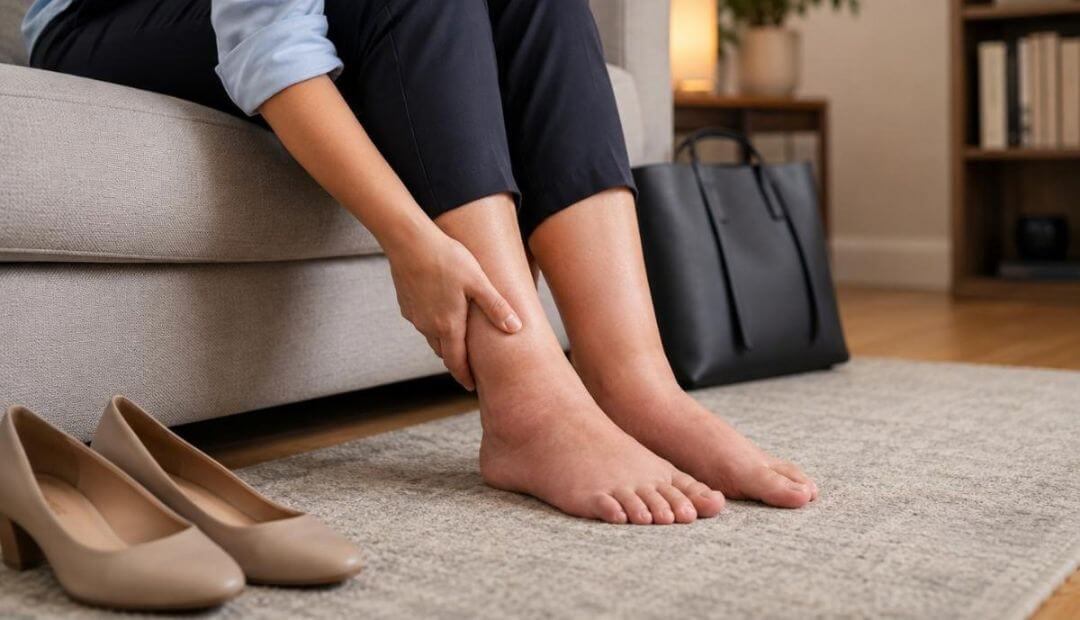
It’s 4.30 on a Tuesday and you take your feet out of your shoes. They are warm, tight and have definitely puffed up since breakfast. One of the most common complaints in an office is feet swelling from sitting too long. However, there are some easy changes you can make at your desk.
This guide will take you through a typical day at work and give you 9 easy ways to keep the fluid flowing. There are also tips on how to set up your desk and what this means if you’re feet are swelling. This is general information and is not a diagnosis.
3 Easy Fixes for Feet Swelling from Sitting Too Long
If you have a busy day and only have time to do a couple of things, do these!
- Every half an hour stand up and walk around for 2 minutes.
- Keep your feet flat on the floor or footrest.
- Drink plenty of water and avoid adding extra salt to your lunch.
Why Do Your Feet Swell from Sitting Too Long?
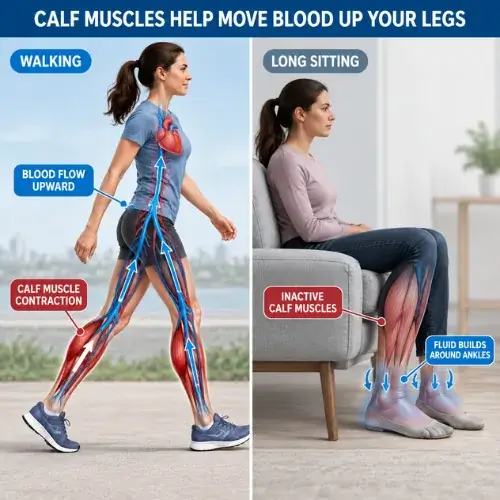
Your calf muscles act like a secondary heart. When you walk your calf muscles contract and help to push blood up your legs. When you are sat for long periods of time your calf muscles won’t be contracting and fluid will build up around your ankles.
The NHS guidance also identifies sitting in the same position for too long as a common cause of swelling in the feet and ankles. This can build up throughout the day.
Often our offices are warm, we have salty lunches and are wearing tight shoes which can make the swelling worse. Often you will notice your feet swelling at the end of the day. Usually this will not be too bad and will settle overnight.
If you notice your feet only swelling after eating, in warm weather or if you do not have any breaks in your day you will know what changes to make.
Uncover What May Cause Daily Swelling
Watch the video to explore how fluid buildup may contribute to puffy feet and why the pattern can reveal important clues.
9 Ways to Reduce Feet Swelling from Sitting Too Long
1. 8.30am – Wear loose shoes and socks
Wear shoes that are slightly wider and have a supportive sole. Avoid heels and tight straps for short periods of time. Wearing socks with loose tops will avoid your calves being squeezed.
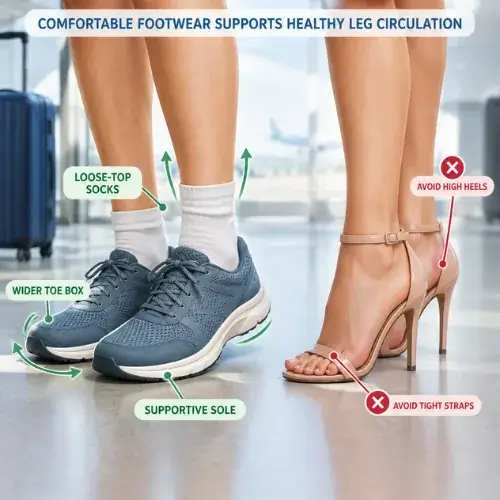
If possible, wear a pair of comfortable shoes at work. Change your shoes at lunch if your feet feel tight. Your feet will slightly swell throughout the day so shoes that feel tight in the morning will be painful by the afternoon.
2. 9.00am – Sit correctly
Sit so that your hips and knees are at a right angle. Keep your feet on the floor. If your feet are dangling then use a footrest or sturdy box. This will prevent pressure on the back of your thighs and will help keep the blood flowing.
Leave a small gap between your seat and the back of your knees. Avoid crossing your legs for long periods of time. This will reduce pressure on the back of your knees.
3. 9.30am – Drink plenty of water
If you are dehydrated your body will retain fluid. Fill up a large bottle of water at the start of your day. Keep it in sight so you can sip throughout the day.
Herbal teas and fruits with lots of water in will count towards your intake. Avoid very sweet and salty drinks. If your doctor has told you to limit your fluids then follow their advice.
4. 10.30am – Move every half an hour
Use a gentle timer on your phone or computer. When it beeps stand up and stretch your calves. Walk to the printer or window. Even small amounts of movement will keep your calf muscles pumping. The CDC travel guidance also recommends moving the legs frequently and exercising the calf muscles during periods of prolonged sitting.
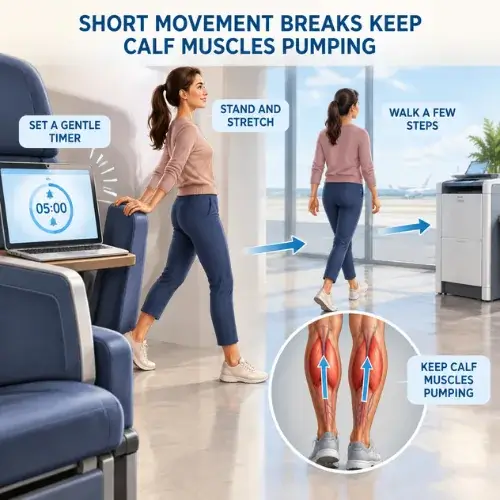
Use phone calls as a great opportunity to stand up or walk around. If you can walk during meetings and use the stairs you will get extra movement. Small amounts of movement throughout the day will help more than one long session at the gym.
5. 11.30am – Do seated exercises
You can do some calf exercises whilst sitting down. This will help to keep the muscles pumping and will not be noticeable to your colleagues. Rolling your feet over a bottle of water will also feel relaxing.
- March – Lift up one knee at a time. Do 30 reps.
- Rock heels and toes – Rock your toes up and then your heels. Do 20 reps slowly.
- Spread toes – Spread and curl your toes. Do 10 reps.
- Roll feet – Roll each foot over a bottle. Do for 1 minute.
Do one set whenever you feel stiff. These exercises will be quiet and unobtrusive. Stop if you feel any pain.
6. 12.30pm – Eat a light lunch
Avoid eating salty foods such as takeaway, soups, instant noodles and processed meats. Choose fresh meals with lots of vegetables, lean protein and wholegrains. Add flavour with herbs, lemon or spices.
Eating foods high in potassium such as bananas, yoghurt, beans and leafy greens will help balance out the sodium. The American Heart Association explains that potassium-rich foods include bananas, leafy greens, beans and yoghurt. If you suffer from kidney disease or certain blood pressure medications then speak to your doctor first. Eat slowly and take a short walk.
7. 2.30pm – Raise your feet
If possible place your feet on a low stool or box underneath your desk. Raising your feet slightly will help the fluid drain. If you have a quiet room then lie down during your break and raise your legs above your heart for 10 minutes. According to Mayo Clinic, raising the affected leg above heart level can help reduce edema.
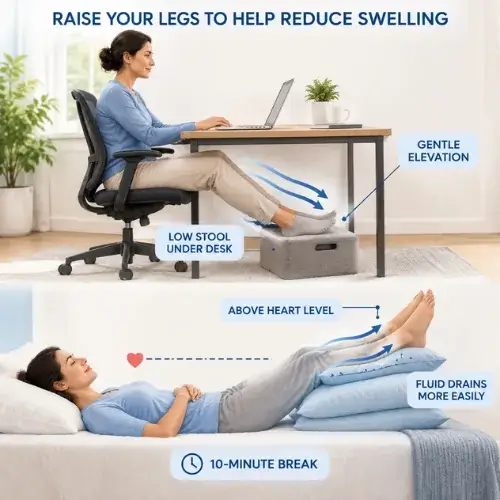
Avoid raising your feet too high so you are straining your back. Keep your posture relaxed. Do this for a few minutes at a time.
Could My Daily Routine Be Causing My Feet To Feel Puffy?
Look Beyond Your Daily Desk Routine
Discover what may connect recurring evening puffiness with fluid retention, and learn which patterns deserve a closer look.
8. 4.00pm – Wear light compression socks
Light compression socks will gently compress your legs and help keep your circulation going. Wear these in the morning before your feet begin to swell. Make sure they are comfortable and not too tight.
Not everyone will be able to wear these. If you suffer from heart disease, poor arterial circulation or reduced feeling in your feet then speak to your doctor first. If you notice any pain, numbness or colour changes stop wearing. The NICE recommendations identify conditions such as peripheral arterial disease and reduced sensation as reasons for avoiding certain compression stockings.
9. 6.00pm – Lie with your legs up
Lie on your back at home and raise your legs up the wall or on a pile of pillows. This will help drain your legs and give your mind a break. Take slow breaths to really relax.
A cool foot bath or lukewarm shower will also help. Avoid very hot baths as this can cause your vessels to widen and make you swell. Gently stroke from your ankles to knees. Avoid massaging if one leg is painful or red.
What Does Feet Swelling from Sitting Too Long Mean?
Often swollen and achy legs are due to blood and fluid building up. Usually this will be due to sitting for long periods of time. Warm and tight skin means the fluid is stretching the skin. This will usually improve with movement and raising your feet.
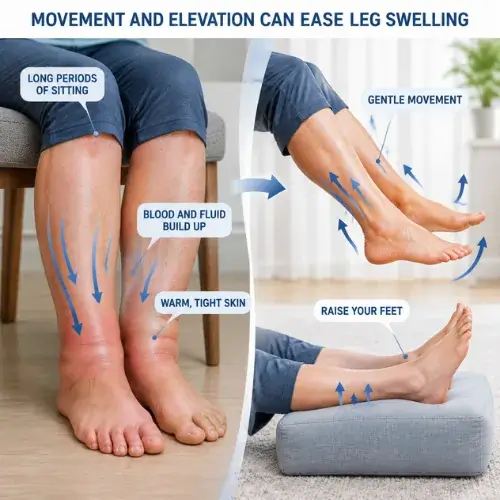
If you are feeling tingling or numbness then this is likely to be due to pressure on your nerves. This could be due to crossing your legs or tight shoes. If you are feeling burning or sharp pain then this should be checked. If one of your calves suddenly goes red and feels hot this should never be ignored.
By noticing these differences you can describe your symptoms clearly to your doctor. You will also know what to try first. Often changing your position can help with a surprising amount of issues.
Quick Desk Checklist
Complete this quick checklist to make sure your desk is helping your legs. Complete this at the start of each week. It should take about a minute.
- Feet are on the floor or footrest.
- No pressure on the back of your knees.
- Have a pair of loose shoes or open sandals nearby.
- Have your water bottle in sight.
- Have a timer to remind you to move every 30 minutes.
- Screen is at eye level so you can sit up straight and breathe easily.
Often small changes can make a big difference. Complete this once a week to avoid your feet swelling. If anything has changed such as new chair/ desk complete this again.
Ankle Swelling Whilst Sitting vs End of Day
Whilst these can look similar they can mean different things. Usually swelling from sitting will build up throughout the day and will improve overnight. It will usually improve with more movement and raising your feet.
If you are swelling quickly whilst sitting or it is still swollen in the morning then this should be looked at. If only one ankle is swollen then this should also be noted. Keep a short diary of when it starts and how long it lasts.
When it’s Not Just Your Chair
Most swelling from sitting at a desk is harmless however there are a few signs that you should see a doctor. Sitting for long periods of time can increase the risk of blood clots. Whilst this is rare it can be serious. Take note if you experience any of the following:
- One leg swollen (especially if painful, warm or red in the calf).
- Suddenly short of breath, chest pain or fast heart rate – This requires emergency treatment.
- Swelling in the morning or for longer than 2 weeks.
- Swelling with sudden weight gain, puffy face or unusual tiredness.
- Brown, shiny or tight skin. Aching and heavy legs.
- Swelling started after starting a new medication.
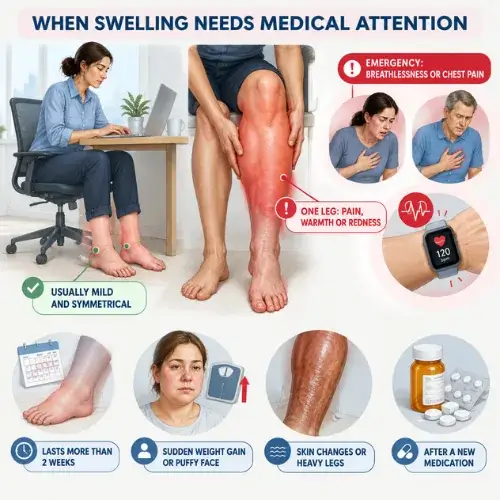
Swelling can be caused by vein issues, thyroid problems or heart, kidney or liver problems. A doctor can examine your legs and do some simple tests. Bring your diary and list of medications. The CDC blood clot guidance describes leg swelling, pain, warmth and redness as possible signs of deep vein thrombosis, while breathing difficulty and chest pain can indicate a pulmonary embolism.
Explore Simple Ways to Feel Better
Watch the video for more insight into fluid movement and discover practical ideas that may help you feel more comfortable.
Simple Changes to Ask For
Many workplaces will be happy to make simple changes for you. A short and polite message will usually work.
- Request a footrest.
- Sit/ stand desk or high counter.
- Permission to have short breaks to move.
- A chair with more leg room.
- Comfortable shoes (if there is a dress code).
If your job involves swollen feet from sitting then mention this to your occupational health or doctor. They can suggest changes that will work for your job. It is reasonable to ask for your comfort and health.
Other Situations
The same principles can be applied to other situations. Drivers can stop every hour to walk around their car and stretch their calves. Make sure you are sitting comfortably and not putting pressure on the back of your knees.
Remote workers often sit at a kitchen table or sofa which offer little support. Try using a proper chair or cushion. Use a pile of books as a footrest. If you need to make calls between rooms this will help you to move around.
Students and commuters can do ankle circles on buses and trains. Stand up if you don’t need a seat. If possible walk part of your journey. Small changes can fit into almost any routine.
What to do tomorrow
You don’t need to do all 9 changes. Pick 3 that feel easy for you. Maybe a footrest, water bottle and 30 minute timer. Try these for a week and see how your feet feel at 4.30.
Feet swelling from sitting is common and usually responds well to small and gentle changes. If it doesn’t then a doctor can look further into it. Your feet carry you all day so they deserve a little extra care!
What Your Puffy Feet May Be Trying to Tell You
If your feet feel puffy every evening, the reason may involve more than sitting too long or eating salty foods.
Watch the video to discover a simple way to think about fluid buildup and what recurring swelling could reveal.