
You get up, head to the toilet and are greeted with a face you don’t recognise. Your eyes are puffy, your cheeks are rounder and you’re wondering what has happened to your face whilst you’ve been sleeping. Many women wonder why their face is swollen in the morning. Luckily, it’s often due to what your body is doing whilst you’re sleeping.
This article will explain how your posture, diet, alcohol, allergens and breathing can cause puffiness in the morning. You’ll also learn what to look out for if you’re experiencing patterns and when to speak to your doctor. This is general information.
Why Your Face Is Swollen In The Morning: What You See In The Mirror
There are few things that can put you off more than a puffy face in the morning. You may spend extra time applying your makeup, avoid meeting people early in the morning or avoid being on video calls. Some women may even feel guilty about what they ate for dinner or went to bed late the previous evening.

Imagine sleeping for seven hours, eating well and still having puffy eyes three times a week. You may try new creams and pillows but eventually give up. However, knowing why can help as it can be very tiring trying to figure out why.
Once you know what is causing the puffiness it can put your mind at ease. Your body follows a set pattern whilst you sleep and puffiness is usually caused by a pattern too.
Could There Be More to the Story?
Discover another perspective on morning facial puffiness and explore how your body’s fluid movement may fit into the picture.
Why Your Face Is Swollen In The Morning After Sleeping
Throughout the day your body will naturally push excess fluid to your legs and feet. When lying down for hours the fluid will redistribute evenly throughout your body. Some will travel to your face.
As your face is thin and loose, especially around your eyes, you’ll notice the puffiness. The Cleveland Clinic also explains that normal overnight fluid retention can make facial puffiness more noticeable when you wake up.
As you’re lying still for hours your muscles will not be moving as much to help your lymphatic system. This will cause excess fluid to build up in your tissues (known as edema by doctors). Once you stand up, move around and wash your face it will usually settle within an hour or two.
This is why you’ll often notice puffiness in the morning. However, if you’re experiencing mild puffiness it is likely due to this normal pattern. If you’re experiencing puffiness throughout the day it is a different story.
8 Common Reasons Your Face Is Swollen In The Morning
1. Sleeping Position & Pillow
Sleeping on your back or stomach can cause excess fluid to build up on your face. Putting one cheek into your pillow can cause one side of your face to look puffier. There isn’t many studies looking into this but many people will notice a difference.
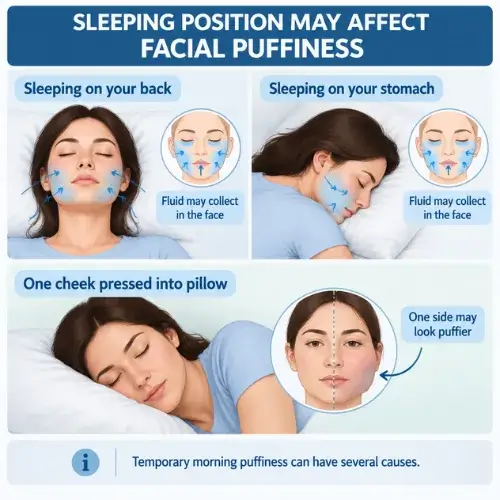
Adding an extra pillow or sleeping at a slight angle can help keep your head slightly above your heart. Sleeping on your side with a supportive pillow will help many. Just make sure your neck is comfortable.
2. Salty Dinners
Salt will cause your body to retain water. This is a common reason why your face will be puffy in the morning. Often restaurant meals, takeaway, instant noodles and snack foods will be high in sodium.
Eating late will mean the sodium has more time to work. The American Heart Association explains that excess sodium can cause the body to retain water, leading to puffiness and bloating.
If you’re noticing your worst mornings are after a salty evening, try finishing your dinner a couple of hours before bed and eating more fresh meals. You don’t need to avoid flavour but just balance it out.
3. Alcohol The Night Before
Alcohol will dehydrate you, cause your blood vessels to widen and disrupt your sleep. This often causes a flushed and puffy face with tired eyes.
Having one glass with your meal won’t affect most people but having a few late at night can. Try alternating between having some alcohol and water and finishing earlier in the evening. If you’re having a little and it is causing significant puffiness and flushing then mention this to your doctor.
4. Allergens In Your Bedroom
Dust mites, pet hair and mould can all thrive in your bedding and mattress. Breathing this in for 8 hours can cause inflammation in your nose and eyes. You may notice your eyes are itchy, watering, sneezing or a stuffy nose.
The American College of Allergy recommends measures such as washing bedding regularly and using dust-proof covers to reduce exposure to bedroom allergens.
Washing your bedding weekly in hot water, using allergen proof pillow covers and avoiding pets on your bed can help reduce this. If you’re still experiencing symptoms then a pharmacist or doctor can suggest treatments for allergies. If your lips, tongue or throat suddenly swell then this is an emergency.
5. Blocked Nose, Snoring & Sleep Apnea
A blocked nose will cause you to breathe through your mouth. This can cause dryness to your face and throat and disrupt your sleep. This can leave you with a tired and puffy face. Loud snoring should also be noted.
If you suffer from sleep apnea you’ll experience breathing interruptions throughout the night. Signs you may have this include loud snoring, gasping for breath, headaches in the morning and feeling very sleepy during the day.
The National Heart, Lung, and Blood Institute lists these as common symptoms and explains that a sleep study may be needed for diagnosis. If this sounds familiar then ask your doctor if having a sleep study would be a good idea.
Why Does Morning Puffiness Return?
If your face still looks swollen after changing your routine, the next video explores another angle worth understanding.
6. Dry Air, Dehydration & Irregular Sleep Times
A dry environment in your bedroom and not drinking enough water throughout the day can cause your skin to become dehydrated and your body to retain water. Irregular Sleep times and very little sleep can cause your face to look more puffy. Often your face will be the first place to show small stressors.

Try to drink water throughout the day to keep your body balanced. If the air feels very dry then a clean humidifier can help. However, make sure it’s clean as a dirty one can cause mould.
7. Hormones
Your hormones (estrogen & progesterone) will affect how your body deals with salt and water. Many women will notice their face becoming puffier in the days leading up to their period. Pregnancy and perimenopause can also cause changes to your water balance.
Keeping a note of your mornings and cycle for 2-3 months often shows a link. If you’re experiencing sudden swelling during pregnancy, especially if you’re also experiencing a severe headache or changes to your vision then contact your doctor or midwife the same day. This can be a sign of preeclampsia. The NHS identifies sudden swelling of the face, hands or feet, particularly alongside headaches or vision changes, as a warning sign that needs immediate assessment.
8. Night Skincare & Makeup
Using heavy night creams, strong actives and leaving your makeup on can cause irritation to your sensitive eye area. This will cause puffiness in the morning. Sometimes fragrances and preservatives can cause a reaction. The U.S. Food and Drug Administration explains that fragrances, preservatives and other cosmetic ingredients can trigger allergic reactions in some people.
Be gentle with removing your makeup. Use thin layers and test new products on a small area. If you’re experiencing a puffy face in the morning after starting a new product then stop using it for a week. If you’re still experiencing redness and itching then see a doctor.
Puffy Hands & Face When Your Face Is Swollen In The Morning
Some women will experience puffy hands and face in the morning. This is often due to the same fluid redistribution whilst sleeping. Salt, hormones or sleeping in one position for a long time can cause this to be worse. Usually this will settle as you move around.
If you’re experiencing tingling or numbness in your hands then this is likely due to pressure on the nerves in your wrist. If you’re experiencing painful and stiff joints in your fingers then this could be a sign of arthritis. If you’re experiencing daily puffiness then ask your doctor to look for a cause.
When Your Face Is Swollen In The Morning: Could It Be Something Else?
Sometimes puffiness in the face in the morning can be a sign of an underlying health issue. These issues usually cause puffiness that doesn’t settle, spreads or comes with other symptoms. Look out for the following signs:
- Thyroid issues – Puffiness builds up slowly. You may also feel tired, cold, dry skin or constipation.
- Kidney issues – Puffiness around your eyes. Puffy ankles or foamy urine. The National Institute of Diabetes and Digestive and Kidney Diseases lists puffy eyelids and foamy urine among possible symptoms of nephrotic syndrome.
- Heart or liver issues – Puffiness with shortness of breath, tightness in your stomach or yellow skin.
- Medications – Steroids, some blood pressure medications and anti inflammatory painkillers can cause fluid retention.
- Hormonal issues – Your face will gradually become rounder. Easy bruising or purple stretch marks.
Whilst these aren’t likely to be the cause of your puffiness every time, they are much less common than simple causes. If you’re noticing a pattern that isn’t improving with better habits then ask for a blood test.
How To Prepare When Your Face Is Swollen In The Morning
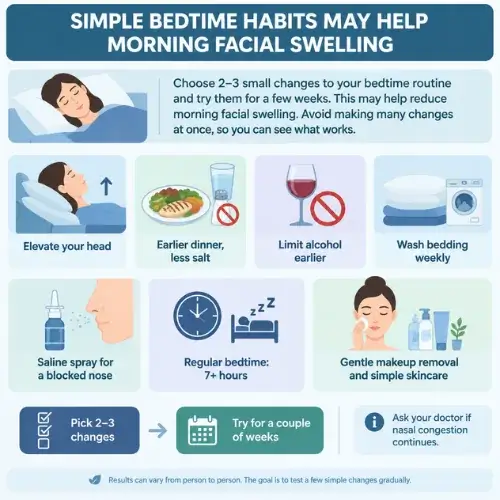
Often small changes to your bedtime routine will help. Pick 2-3 of the following and try for a couple of weeks. Don’t try to make too many changes as it will be difficult to tell what’s working.
- Use an extra pillow or wedge to elevate your head.
- Eat an earlier dinner and reduce the amount of salt.
- Stop drinking alcohol earlier or avoid altogether on busy days.
- Wash your bedding weekly. Consider using allergen proof covers.
- Use saline sprays to clear your blocked nose. If you’re still congested then ask your doctor.
- Have a regular bedtime to ensure you’re getting 7+ hours sleep.
- Be gentle with removing your makeup. Keep your skincare simple.
If you’re still experiencing puffiness in the morning then a splash of cold water and short walk will help move the fluid along. Most puffiness will settle within an hour or two. Try to keep calm in the morning.
Keep A Note For 2 Weeks
Keeping a simple diary will help turn a vague worry into clear evidence. Rate your puffiness each morning out of 3. Note what you had for dinner the previous evening, how much alcohol you had, what time you went to bed, how you set up your pillow and what day of your cycle you were on.
After 2 weeks look for any links. If you’re experiencing puffiness most mornings then look for links to having salty dinners, not getting much sleep or being on a certain part of your cycle. Take your diary to your doctor.
If it ever makes you more anxious then stop. We want to understand why not perfect.
Is It Normal If Your Face Is Swollen In The Morning?
Is it normal to have puffiness in the morning?
Mild puffiness that settles within a couple of hours is common and usually nothing to worry about. Many people will experience puffiness after eating salty foods, not getting much sleep or hormonal changes. However if you’re experiencing puffiness throughout the day then it’s worth having a medical check.
Will drinking water before bed make it worse?
Drinking a large amount of water right before bed may disrupt your sleep. However, having the correct amount of water won’t cause puffiness. In fact dehydration can cause your body to retain water. Try to drink water throughout the day and reduce in the last hour.
Will changing my pillow help?
Some people will find using a supportive pillow to keep their head slightly elevated will help. Others won’t notice much of a difference. Try to make one change at a time and see how you get on over 2 weeks.
When To See A Doctor If Your Face Is Swollen In The Morning
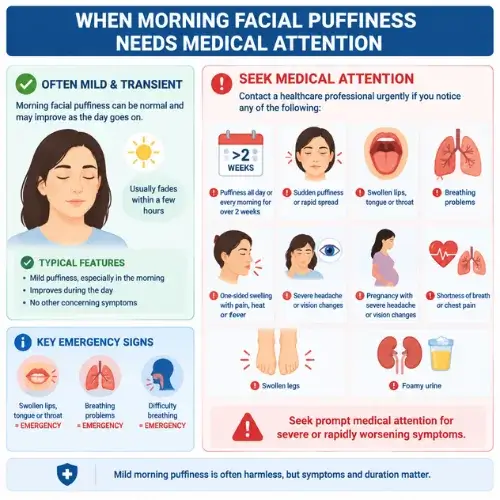
Most mild puffiness in the morning is nothing to worry about however if you’re experiencing any of the following then seek prompt medical attention.
- Puffiness throughout the day or every morning for over 2 weeks.
- Sudden puffiness or puffiness that spreads quickly.
- Puffiness in your lips, tongue or throat. Or any issues with breathing.
- Puffiness on one side of your face with pain, heat or a fever.
- Puffiness with a severe headache or changes to your vision. Especially if you’re pregnant.
- Puffiness with shortness of breath, chest pain, swollen legs or foamy urine.
Your doctor will ask about your sleeping, medications and symptoms. They will also check your blood pressure and examine you. They may also carry out blood and urine tests. Having a diary will help speed this up.
Wake Up Feeling Like Yourself Again
Having a puffy face in the morning rarely means there is anything wrong. It is often due to how your body is dealing with fluid, salt, allergens and sleep. Making a few thoughtful changes can help you see a more familiar face by sunrise.
If you’re not seeing any improvements with your habits or noticing any red flags then it’s important to get medical answers to keep you healthy. You deserve to have a good nights sleep and calm mornings. Start with a small change tonight.
What Could Your Morning Facial Puffiness Reveal?
Discover why a puffy face may involve more than salty food, poor sleep, or ordinary fluid retention.
Watch the next video to explore the lymphatic system’s role in fluid movement and a simple check that may offer a surprising new perspective.