

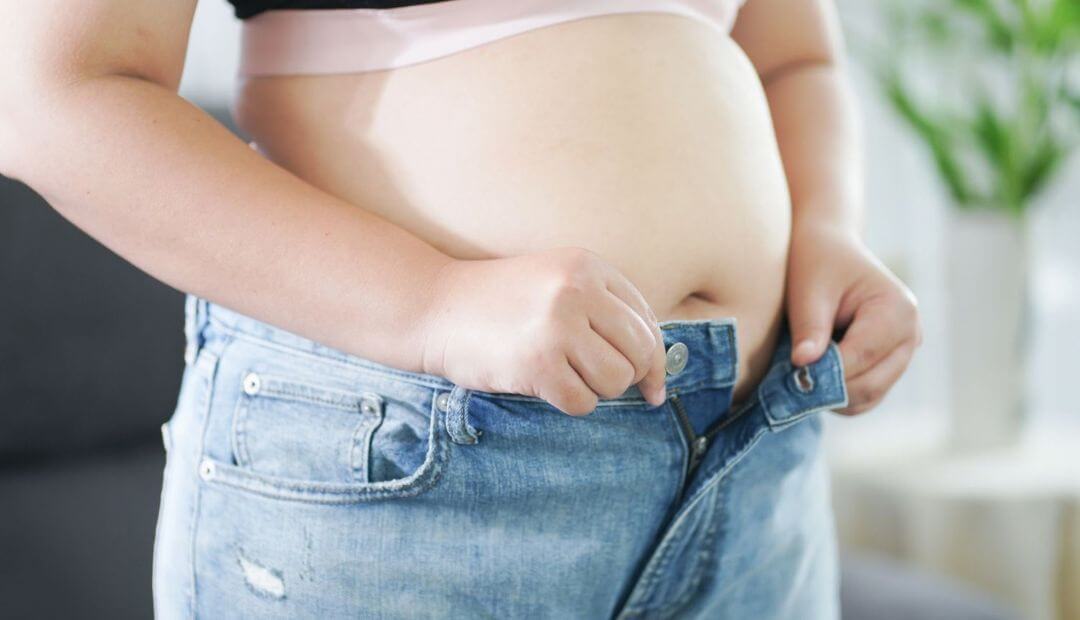
You’ve just finished a meal that looked perfectly normal, but your stomach feels tight and full. Your waistband feels tight and you’re wondering what you have done wrong. Many women experience bloating after eating anything a few times a week but there aren’t many people explaining why.
Most of the time it can be managed with healthy lifestyle choices. The NHS also explains common causes of bloating and when medical advice may be needed.
This article will explain why you are getting bloating and gas, with tips on how to feel better with 8 easy to do tips. It will also give you some quick tips to help you feel better. You’ll also learn when to see a doctor. This is general advice and not a diagnosis.
When Every Meal Feels Like A Question Mark
Bloating can really affect how much you enjoy your meals. You may find yourself choosing your clothes based on how comfortable your waist feels.
Or you may avoid eating dinner with friends because you know you won’t enjoy the aftermath. Some women will eat smaller portions and then feel bloated after eating so little, wondering if something is wrong with their body.
Imagine someone who orders a salad to keep them light but then feels uncomfortable throughout the afternoon. They try to avoid more foods but every week their list gets longer. Their relationship with food becomes stressful.
This is a common issue to have but most of the time there is a logical reason for most of the bloating you are experiencing. Making simple changes can help. Understanding your gut will help you gain confidence with eating.
Why Do I Feel Bloating After Eating Anything?
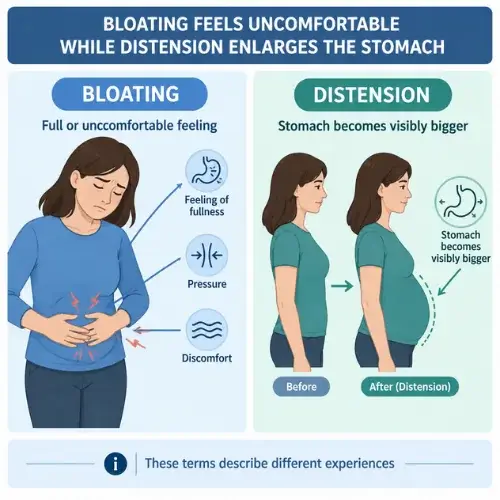
Bloating means you are feeling full, tight or uncomfortable in your stomach. Sometimes you may also notice your stomach looks bigger, this is referred to as distension by doctors.
However, you may feel very bloated but not see any difference. The NIDDK describes this difference between feeling bloated and having visible abdominal distension.
Gas is caused by swallowing air and bacteria in your large intestine fermenting your food. Everyone will have gas but some people will feel it more due to having a sensitive gut. If your food is passing slowly through your gut and you are constipated, this can cause trapped gas.
This is why you may feel fine in the morning but tight in the evening. Your gut can also vary from meal to meal. Stress, sleep and your cycle will all affect how your gut is feeling.
Could There Be Another Clue?
If your belly feels swollen after small meals, click below to explore another perspective beyond common digestive triggers.
Common Reasons For Feeling Bloated And Gas After Eating
Eating Too Quickly
Swallowing a lot of air can cause bloating. This can happen if you’re eating too quickly, using straws, chewing gum or talking whilst eating. This can cause pressure, burping or cramping. This is one of the easiest things to fix.
Try to eat more slowly next time. If you’re finishing your plate in under 10 minutes, your gut won’t have time to tell you you’re full. Eating slowly can often help reduce bloating.
Foods That Often Cause Gas
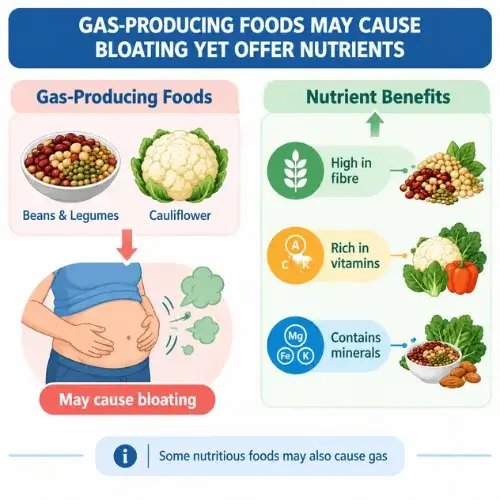
Certain foods can cause gas. Beans, lentils, onions, garlic, cabbage, broccoli and wheat contain carbohydrates that will ferment in your colon. Carbonated drinks will cause extra gas. Sorbitol and Xylitol (sugar alcohols) can cause gas and looser stools. Even healthy foods can cause bloating.
Fats can slow digestion in your stomach. Eating a heavy fatty meal can leave you feeling full and bloated for hours. Eating large portions can cause your stomach to stretch causing pressure. Eating smaller balanced meals is usually easier for your gut.
Food Intolerances (Lactose, Fructose & Gluten)
Lactose intolerance means you don’t produce enough of the enzyme to digest milk sugars. Some people can have similar symptoms from fructose found in fruit, honey and sweeteners. You often get gas, bloating, cramping and looser stools within a few hours.
Celiac disease is an immune related issue caused by gluten. This should be properly tested for. Don’t cut out gluten before being tested as it can make the results unclear. If you have long term symptoms, anemia or a family history ask your doctor about screening. The NIDDK’s guidance also explains why testing should happen before starting a gluten-free diet.
Constipation, IBS & Imbalanced Gut Bacteria
Constipation can cause trapped gas and stools. Many people will feel better after going to the toilet. Irritable bowel syndrome (IBS) causes recurring stomach pain with changes in bowel habits. It often causes bloating.
This will be diagnosed by your doctor based on your symptoms and ruling out other issues. According to the NIDDK, bloating can also occur alongside the abdominal pain and bowel changes associated with IBS.
Small intestinal bacterial overgrowth (SIBO) can also cause bloating. Some doctors will test for this using breathing tests. Don’t self medicate with long term supplements.
Hormones, Medication & Stress
Hormonal changes before and during your period can cause gas, bloating and changes in bowel habits. Some medications and supplements (iron, some diabetes medications, fibre products) can cause digestive issues. Stress can cause your gut to slow down or speed up and become more sensitive.
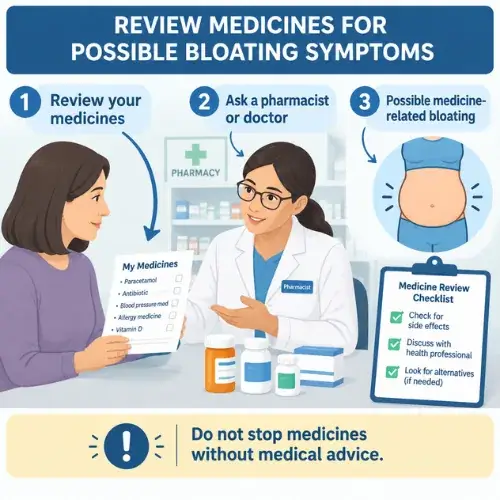
If your bloating started after changing medication or supplements, have a chat to your doctor or pharmacist. Never stop taking a prescription medication. Often small changes can help.
8 Tips To Help Reduce Gas In Your Stomach
1. Eat Slowly
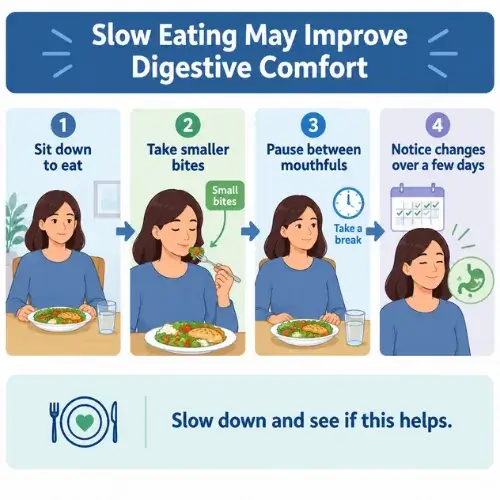
Chewing your food breaks it down into smaller pieces and tells your digestive system to prepare. Put your fork down between each mouthful. Aim to eat for at least 20 minutes.
Eating calmly will help you realise when you’re full. Avoid using straws, chewing gum and talking with a full mouth. Sit down to eat.
2. Keep A Food & Symptom Diary
Everyone’s triggers will be different so it can be tricky to guess. Keep a diary for 2 weeks noting what you ate, when your symptoms started and how severe they were. Also note how stressed you were, how much you slept and what day of your cycle you were on.
Often patterns will start to show. For example bloating after dairy, onions or large meals. Share this with your doctor or dietitian. This will help turn your worries into useful information.
3. Change Fibre Slowly
Fibre can help keep your bowels regular. Constipation is a common cause of bloating. However, adding too much fibre suddenly can cause more gas. Add fibre slowly over a few weeks and ensure you’re drinking enough water.
Oats, chia, cooked vegetables and ripe fruit are often easier to tolerate. Raw fibrous vegetables and bran can be harder to digest. If you’re struggling with a fibre supplement, ask your pharmacist for an alternative. Consistency is key.
What Else May Affect Abdominal Swelling?
Explore how fluid movement fits into the bigger picture when bloating persists despite changes to your eating habits.
4. Try A Guided Low FODMAP Diet
FODMAPs are fermentable carbohydrates found in foods like onions, garlic, wheat, beans and some fruits. Many people with IBS will find this helpful to identify their triggers. It should only be done for a short period of time. The NIDDK’s dietary guidance explains how a low FODMAP approach may help some people with IBS.
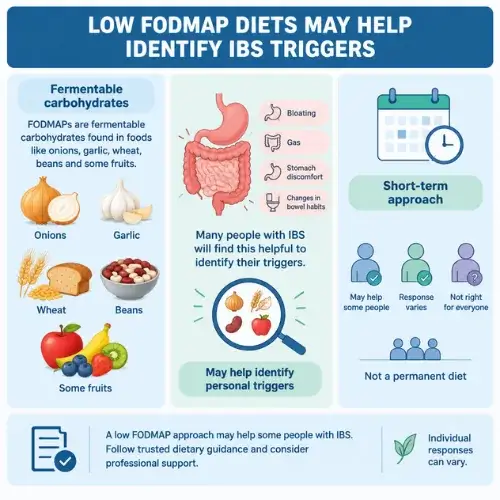
A registered dietitian can help you remove and then add foods back in. If you do this on your own you may remove too much. Always rule out other issues with your doctor.
5. Try Lactose Free Products
If you’re bloating after eating milk, ice cream or soft cheese try lactose free products for a couple of weeks. Hard cheeses and yogurt have less lactose and are often well tolerated.
Some people will find lactase enzyme tablets helpful when eating dairy. The NIDDK’s information describes how lactose intolerance can cause bloating, gas and abdominal discomfort.
Could There Be Another Clue?
If your belly feels swollen after small meals, click below to explore another perspective beyond common digestive triggers.
If you’re reacting to apple juice, honey or sugary drinks, note this. Don’t cut out whole food groups. If symptoms continue ask about testing.
6. Avoid Carbonated Drinks, Chewing Gum & Sugar Alcohols
Carbonated drinks can cause gas in your stomach. Chewing gum can cause you to swallow more air. Sugar free sweets and some protein bars can cause gas as they contain sorbitol, mannitol or xylitol. Check the ingredients if you’re bloating after snacking.
Instead of fizzy water try still water or herbal tea. Many people find peppermint or ginger tea calming. Try to reduce rather than cut out.
7. Go For A Light Walk
A light walk will help food and gas pass through your digestive system. Many people find 10-15 minutes helpful. Avoid vigorous exercise after a large meal.
Regular exercise will help keep your bowels regular and reduce stress. If you enjoy it add in some yoga or stretching. Avoid lying flat straight after a meal as this can cause reflux and pressure.
8. Relax Your Gut
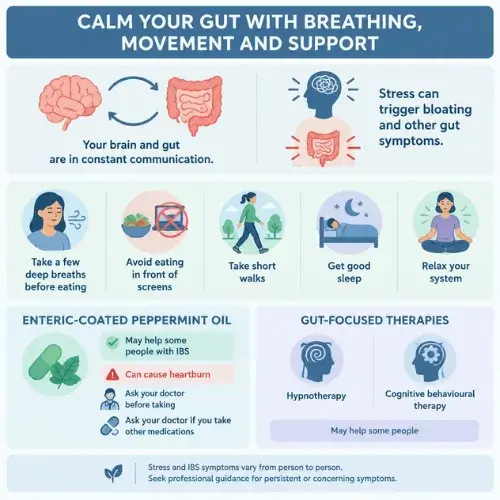
Your gut and brain are constantly communicating. Stress can cause bloating. Take a few deep breaths before eating. Avoid eating in front of screens. Taking short walks and getting good sleeps can help relax your system.
Some people with IBS find enteric coated peppermint oil helpful. However, this can cause heartburn. Ask your doctor before taking. If you’re on other medications ask your doctor. Some people find gut focused therapies such as hypnotherapy or cognitive behavioural therapy helpful.
Quick Tips To Help With Bloating Stomach
Sometimes you need quick tips to help. These can help relieve pressure. If you’re in a lot of pain seek advice.
- Go for a slow walk around your house or outside.
- Apply a warm (not hot) heat pack to your stomach for a few minutes.
- Try a gentle yoga pose such as lying on your back with your knees to your chest.
- Sip some peppermint or ginger tea.
- Loosen your tight waistbands and sit in a relaxed position.
- Ask your pharmacist about anti gas products.
Avoid laxatives and fasting to flatten your stomach as this can cause more cramping and upset your gut in the long term. Gentle is best.
Female Bloating – Period, Hormones & Gut
Many women will feel more bloated around their period. Hormonal changes can cause your digestion to slow down or speed up. Prostaglandins can cause cramping and looser stools. This often happens every month.
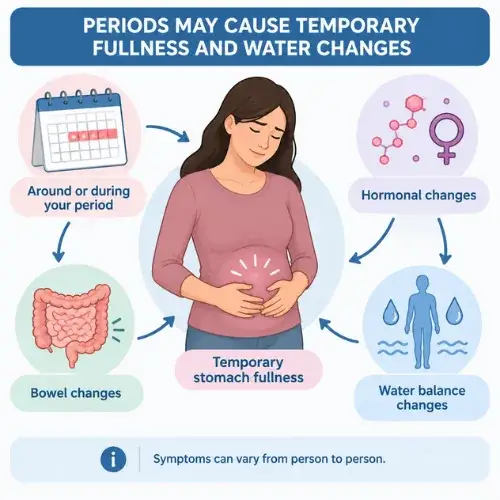
Keeping track of your symptoms will help you plan lighter and simpler meals on more difficult days. Gentle exercise and warmth often helps. If you’re also experiencing severe pelvic pain or heavy bleeding talk to your doctor.
If you’re experiencing long term bloating (a few weeks), this should be addressed. Occasionally this can be a sign of an issue that needs to be checked. This can occasionally be a sign of ovarian issues.
The American College of Obstetricians and Gynecologists lists persistent bloating and feeling full quickly among symptoms that should be discussed with a healthcare professional. It’s reassuring to have early checks.
When To See A Doctor For Bloating After Eating Anything
Occasional bloating is common however if you notice any of the below you should seek advice from your doctor. Trust your instincts.
- Bloating is ongoing, getting worse or lasting for a few weeks.
- Painful bloating stomach with severe, sharp or constant pain.
- Unintentional weight loss, loss of appetite or feeling full after eating small amounts.
- Blood in your stools, black stools or constant vomiting.
- Difficulty swallowing or anemia.
- Changes in bowel habits after the age of 50 or a family history of bowel or ovarian cancer.
- Swollen legs, yellow skin or a rapidly growing stomach.
Your doctor may ask about your diet, bowel habits and medications. They may also examine your stomach. They may perform blood, stool or breath tests. Bringing your food diary will help.
Common Questions About Bloating After Eating Anything
Why am I feeling bloated after eating a little?
A sensitive gut can cause pressure from eating small amounts. Constipation or slow digestion can also contribute. Stress and hormones can also play a part. If this is happening regularly ask your doctor to investigate.
Why is my stomach bloating after eating anything?
If you’re feeling bloated after nearly every meal, look at your habits. Are you eating quickly? Large portions? Drinking fizzy drinks? Stress? If symptoms continue ask your doctor to check for issues such as IBS, intolerances or Celiac. Don’t cut out lots of foods without guidance.
Feel Confident With Food Again
Feeling bloated after eating can be uncomfortable but is usually manageable. Eating slowly, identifying your triggers, changing fibre, exercising after eating and reducing stress can all make a big difference to your days. Making small changes will give your gut more space to settle.
If symptoms continue or you notice any worrying symptoms, seeking medical advice will keep you well. You deserve to enjoy your meals. Be kind to your body whilst learning what works for you.
What If Your Bloated Belly Has Another Clue?
Discover a different perspective on abdominal bloating and why your belly may feel swollen even after small meals.
Watch the next video to explore the lymphatic system’s role in fluid movement and a simple check that may offer a new perspective.