


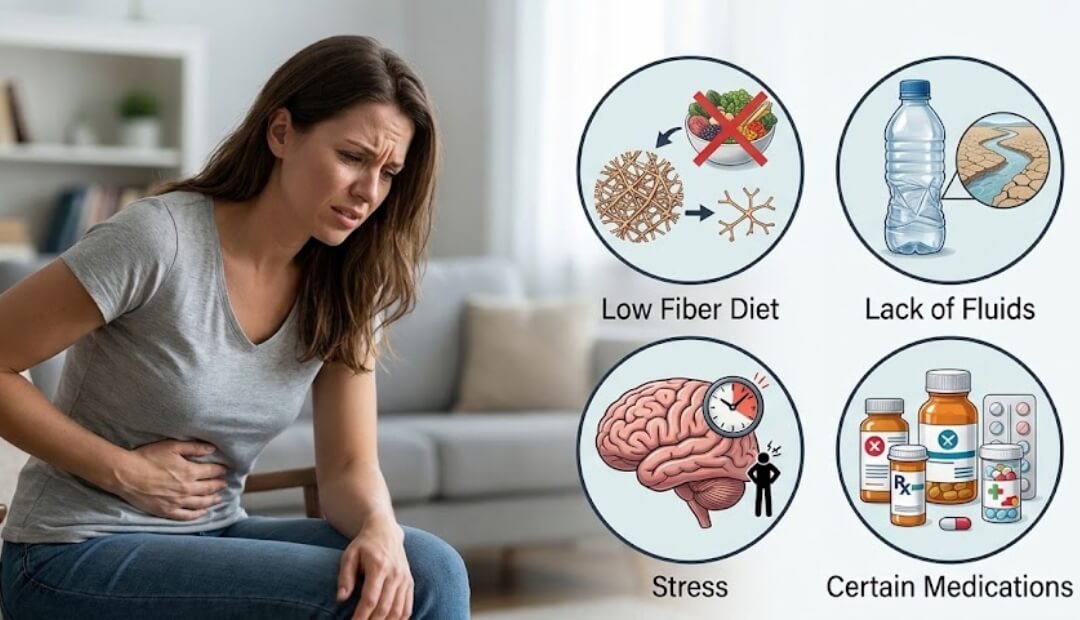
Passing hard stools can turn an ordinary bathroom visit into an uncomfortable daily struggle. You may sit for several minutes, strain repeatedly, and still feel that your bowel has not emptied completely. Understanding the possible hard stool causes can help you recognize what might be happening and choose more effective next steps.
For many adults, especially those over 45, constipation becomes a recurring problem rather than an occasional inconvenience. It can affect comfort, confidence, daily routines, and even the willingness to travel or eat outside the home. The frustrating part is that adding more water or changing breakfast does not always solve the problem.
Hard stools usually develop when bowel movements become difficult or stool loses too much water before leaving the body. However, several factors can contribute to this process, sometimes at the same time. Let’s examine the most common explanations and what you can do about them.
What Do Hard Stools and Constant Straining Really Mean?
Constipation does not simply mean having fewer bowel movements than other people. It can also involve dry, lumpy stools, painful passage, excessive straining, or a persistent feeling of incomplete emptying. Some people experience several of these symptoms even when they visit the bathroom regularly.
Your Constipation May Have Another Cause
Discover why hard stools and constant straining may continue despite your efforts to improve your digestive habits.
Doctors often consider fewer than three bowel movements per week one possible sign of constipation. However, your usual bowel pattern matters because normal frequency varies between individuals. The National Institute of Diabetes and Digestive and Kidney Diseases (NIDDK) explains the main symptoms and characteristics of constipation.
Pay attention to the consistency of your stool, not just how often you go. Small, hard pieces may indicate constipation, while large, dry stools can also become difficult to pass. Repeated straining deserves attention because it may point to more than a simple lack of dietary fiber.
Hard Stool Causes: Why Does Stool Become So Dry?
Your colon absorbs water from material moving through the digestive system. When stool remains in the colon for too long, it can lose additional water and become harder. This often makes bowel movements slower, more uncomfortable, and increasingly difficult to complete.
There is rarely one explanation for every case of constipation. Diet, hydration, physical activity, medications, medical conditions, and bowel muscle coordination can all influence bowel movements. Identifying the most relevant hard stool causes is therefore more useful than assuming everyone needs the same solution.
1. Not Getting Enough Dietary Fiber
Fiber helps add bulk to stool and supports regular bowel movements. Some types also absorb water, helping stool become softer and easier to pass. A diet containing few fruits, vegetables, legumes, and whole grains may contribute to constipation.
This problem can develop gradually when meals rely heavily on refined grains, processed foods, and low-fiber snacks. You might eat enough calories every day but still miss the fiber your digestive system needs. Increasing fiber gradually may help, although a sudden increase can cause gas and bloating.
Useful fiber sources include oats, beans, lentils, pears, apples, vegetables, and whole grains. Prunes and kiwi may also help some people maintain more regular bowel movements. The best approach is usually a varied diet rather than relying on one supposedly powerful food.
2. Not Drinking Enough Fluids
Fluids help support normal digestion and allow fiber to work effectively. When you do not drink enough, dehydration may contribute to harder stools. This can become more noticeable during hot weather, illness, or periods of increased sweating.
Some people limit their water intake because they dislike frequent bathroom visits. Others simply forget to drink throughout a busy day. If you increase your fiber intake, adequate fluids become particularly important.
Your fluid needs depend on your health, activity level, climate, and medications. People with certain heart or kidney conditions may need specific fluid limits. Ask your healthcare professional about an appropriate daily intake if you have been advised to restrict fluids.
3. Slow Movement Through the Colon
Sometimes the digestive system moves stool through the colon more slowly than usual. The longer stool remains there, the more water the colon can absorb. This may result in dry stools, fewer bowel movements, and persistent constipation.
Slow bowel movement can have several contributing factors, including certain medical conditions and medications. It may also occur without an obvious underlying cause. If dietary changes and basic self-care do not improve your symptoms, a medical evaluation can help identify the problem.
4. Ignoring the Urge to Have a Bowel Movement
It is easy to postpone a bathroom visit when you are working, commuting, or caring for someone. However, repeatedly ignoring the urge can disrupt your normal bowel routine. Stool may remain in the colon longer and become harder to pass.
Some people also avoid public bathrooms because they feel uncomfortable using them. Others delay bowel movements because previous experiences involved pain or excessive straining. Responding to the urge when possible can help support a more consistent routine.
5. Certain Medications and Supplements
Medication-related constipation is an important possibility, particularly when symptoms begin after starting a new treatment. Some medicines can slow intestinal movement or affect the muscles involved in bowel function. Iron supplements, opioid pain medicines, and certain antidepressants are examples.
Other possible contributors include some antacids containing calcium or aluminum and certain medicines used for blood pressure. The effect depends on the specific drug and individual circumstances. The NIDDK guide to constipation symptoms and causes provides a broader list of medication-related and medical factors.
The Missing Answer May Surprise You
Explore why dietary fiber and water may not explain every case of hard stools and difficult bowel movements.
If constipation appeared after a medication change, discuss the timing with your healthcare professional. They may review the dose or consider an alternative when appropriate. Never stop a prescribed medication or change its dose without medical guidance.
Why Does Straining Continue Even When You Eat Well?
One confusing experience is having a reasonably balanced diet but still struggling to pass stool. You may eat vegetables, drink water, and walk regularly without experiencing meaningful relief. This can happen because constipation does not always result from diet alone.
Pelvic Floor Coordination Problems
Passing stool requires several muscles to work together in a coordinated way. The pelvic floor muscles and anal sphincter must relax appropriately while the rectum pushes stool outward. If these muscles do not coordinate correctly, evacuation can become difficult.
Some people feel that stool reaches the rectum but refuses to come out easily. They may strain repeatedly, change positions, or return to the bathroom several times. This pattern can suggest a defecation disorder rather than simply dry stool.
Doctors can evaluate these problems through a physical examination and, when necessary, specialized tests. Treatment may include pelvic floor biofeedback, which helps retrain muscle coordination. Simply taking more laxatives may not address the underlying difficulty when muscle coordination is the main issue.
Changes in Bowel Habits With Age
Constipation becomes more common among older adults, although aging does not make persistent constipation inevitable. Changes in activity, diet, fluid intake, and medication use may contribute. Some health conditions that become more common with age can also affect bowel function.
Adults over 45 may notice that their bowel habits no longer resemble those of earlier years. A previously predictable routine may become slower or less comfortable. New or persistent changes deserve attention rather than being dismissed as a normal part of getting older.
Medical Conditions That Can Affect Bowel Movements
Several health conditions can contribute to constipation or make existing symptoms worse. Examples include diabetes, hypothyroidism, neurological disorders, and certain gastrointestinal conditions. The relationship depends on the condition and how it affects digestion, nerves, hormones, or muscle function.
Constipation can also occur alongside irritable bowel syndrome, particularly the constipation-predominant form. People with this condition may experience abdominal pain, bloating, and changes in bowel habits. A healthcare professional can help distinguish IBS from other possible explanations.
Persistent symptoms should not automatically be attributed to aging or an unhealthy diet. A clinician may review your medical history, medications, and associated symptoms before recommending tests. This approach helps avoid treating the symptom while overlooking its possible cause.
How Chronic Constipation Can Affect Everyday Life
Living with constipation can be exhausting even when the symptoms seem relatively minor. You may start planning your mornings around bathroom visits or worry about finding a restroom while traveling. These small adjustments can gradually make ordinary activities feel less comfortable.
Repeated straining can also cause soreness and irritation around the anus. In some cases, it may contribute to hemorrhoids or aggravate an existing anal fissure. Pain during bowel movements can then make people delay their next bathroom visit, creating another frustrating cycle.
There can also be an emotional burden that people rarely discuss openly. You might feel embarrassed, uncomfortable, or reluctant to explain the problem to someone else. Remember that constipation is a common medical concern, and discussing it with a healthcare professional is entirely appropriate.
What Can Help Soften Hard Stools and Reduce Straining?
The most useful approach depends on why constipation is happening. Many people improve with practical dietary and lifestyle adjustments, while others need medication or further evaluation. A consistent routine is generally more helpful than repeatedly trying unrelated remedies.
Increase Fiber Gradually
Include fiber-rich foods throughout the day instead of adding a large amount at once. Try oats at breakfast, fruit between meals, and vegetables or beans with lunch and dinner. Gradual changes may reduce the gas and bloating that sometimes follow a sudden fiber increase.
Some people benefit from a fiber supplement when food alone does not provide enough. Psyllium is one commonly used option, but it requires adequate fluid intake. Ask a healthcare professional before using supplements if you have swallowing difficulties, suspected bowel obstruction, or significant unexplained abdominal symptoms.
Drink Enough Fluids
Make drinking fluids a regular part of your daily routine. Keep water accessible and drink throughout the day rather than waiting until you feel very thirsty. Adequate hydration can support softer stools, especially when combined with sufficient fiber.
More water is not necessarily better for everyone. People with medical fluid restrictions should follow their clinician’s advice. The goal is to avoid dehydration while respecting your individual health needs.
Move Your Body Regularly
Physical activity may help support normal bowel function. Walking, gentle cycling, and other activities suited to your abilities can be useful starting points. Even short periods of movement may be easier to maintain than an ambitious exercise routine.
If you spend much of the day sitting, try adding regular movement breaks. A short walk after a meal can become a simple daily habit. Choose activities that fit your health, mobility, and current fitness level.
Your Bowel Habits May Reveal More
Learn about an overlooked perspective on persistent constipation and what could make bowel movements harder than they should be.
Build a More Comfortable Bathroom Routine
Try sitting on the toilet at a consistent time each day, often after breakfast. Eating stimulates natural digestive activity, which may make that time suitable for some people. Give yourself enough time without turning every visit into a prolonged effort.
A small footstool can raise your knees above your hips and make the position more comfortable. Leaning slightly forward and relaxing your abdomen may also help. Avoid forceful or prolonged straining, and leave the bathroom if nothing happens.
Discuss Suitable Constipation Treatments
If lifestyle changes are insufficient, a healthcare professional or pharmacist may recommend an appropriate laxative. Options include fiber supplements, osmotic laxatives, and certain stimulant products. Each type works differently, so the best choice depends on your symptoms and medical history.
Polyethylene glycol is one osmotic laxative supported by clinical guidelines for chronic idiopathic constipation. Other treatments may be appropriate when initial options do not work or cannot be tolerated. The American Gastroenterological Association and American College of Gastroenterology guideline discusses evidence-based medication options.
Do not assume that stronger laxatives are always more effective or suitable for long-term use. Frequent reliance on medication without understanding the cause may delay appropriate assessment. Ask a healthcare professional how long to use a product and when to seek further help.
When Should You See a Doctor About Hard Stools?
Occasional constipation often improves with appropriate self-care. However, recurring symptoms, persistent straining, or a noticeable change in bowel habits deserve medical attention. Arrange an appointment if constipation does not improve or repeatedly returns despite reasonable changes.
It is especially important to seek advice if you notice blood in your stool, unexplained weight loss, or persistent abdominal discomfort. A sudden change in bowel habits, ongoing fatigue, or a family history of colorectal cancer also deserves discussion. Your doctor can decide whether further examination or testing is necessary.
Seek urgent medical attention if constipation occurs with severe or constant abdominal pain, vomiting, fever, or an inability to pass gas. Rectal bleeding or black, tarry stools also require prompt medical assessment. Do not try to manage potentially serious symptoms with home remedies alone.
Persistent constipation sometimes requires investigation beyond routine dietary advice. Depending on your symptoms, a clinician may review medications, perform an examination, or request blood tests. Some patients with ongoing evacuation problems need specialized bowel function testing.
Why Finding the Underlying Cause Matters
Hard stools are a symptom, not a complete explanation of what is happening inside your digestive system. Two people may experience almost identical bathroom difficulties for entirely different reasons. One may need more dietary fiber, while another may have medication-related constipation or pelvic floor dysfunction.
This is why repeatedly switching foods or trying random supplements can become frustrating. A better strategy begins with understanding your symptoms, reviewing possible contributing factors, and choosing an appropriate response. When constipation persists, professional guidance can help identify a more targeted approach.
Keep a simple record of your bowel movements, stool consistency, diet, medications, and associated symptoms. This information can help your doctor recognize patterns that might otherwise be difficult to remember. It also gives you a clearer picture of whether your symptoms are improving.
Final Thoughts: You Shouldn’t Have to Strain Every Day
Hard stools, repeated straining, and incomplete bowel movements can affect far more than bathroom comfort. They may interfere with your routine, create anxiety, and make you feel that your digestive system is no longer predictable. These symptoms deserve attention, especially when they continue for weeks or repeatedly return.
Understanding the possible hard stool causes is a useful first step toward finding relief. Fiber, fluids, movement, and better bathroom habits can help many people, but they do not address every underlying problem. If your symptoms persist, a healthcare professional can help determine what is happening and discuss suitable treatment options.
You do not need to accept constant straining as an unavoidable part of getting older. With the right information and an appropriate plan, many people can improve their bowel habits and feel more comfortable again. Start by paying attention to the pattern, rather than treating every difficult bowel movement as an isolated event.
What If Your Constipation Has a Hidden Cause?
Discover why hard stools and constant straining may continue even when you improve your diet and daily habits.
Watch now to explore an overlooked perspective on digestive health and learn what may be preventing more comfortable bowel movements.